
Since 2008, Johnson County Community College (JCCC) has woven climate action into the fabric of campus life, creating a lasting culture of environmental consciousness. That year, the college signed the American College & University Presidents’ Climate Commitment (ACUPCC), a bold move that sparked years of dedicated action. Executive Director of JCCC’s Center for Sustainability Jay Antle recalls the impact: “It was a very public statement by our president that this is something our college was going to do.” This commitment has stayed strong, fostering a campus where sustainability is more than a concept—it’s a daily practice supported by students, faculty, and the broader community.
A Legacy of Student Leadership and Vision
One of the most inspiring aspects of JCCC’s journey has been the role students have played in shaping climate action on campus. A standout example of student-led innovation is the Sustainability Initiatives Fund (SIF), created in 2010, which came to life thanks to a $1-per-credit-hour green fee that students advocated for, funded by students for students. This initiative allowed students to leave a legacy of positive change on campus. “The students did all the work,” says Antle, noting that they gathered thousands of signatures and met with the college president to make the fund a reality. The SIF now funds various projects, from solar energy installations to campus recycling programs, with students playing a significant role in determining how funds are spent.
One of the SIF’s impactful contributions has been installing solar-powered device charging stations across campus. Antle explains that students proposed, designed, and built these stations, allowing them to see firsthand how renewable energy can be a part of their everyday lives. “It’s about making solar and renewable energy more broadly part of students’ everyday lives on campus,” he says, highlighting the importance of visibility and accessibility for sustainable practices.
Climate Work in Action: The Student Sustainability Committee
The Student Sustainability Committee (SSC) oversees the SIF and is central to JCCC’s green mission. Through the committee, students actively shape how environmental action dollars are spent, making eco-consciousness a living, breathing aspect of JCCC’s culture. The SSC has funded projects like the “Epicenter” student-focused sustainability conference—which brings together hundreds of students each year to discuss climate change, water conservation, and other pressing issues. Students also host hands-on Repair Fairs and E-waste recycling events, fostering a community of environmentally conscious thinkers and doers.
Antle notes, “Students get to be deeply invested in their campuses and communities, seeing the tangible effects of their work.” This hands-on learning model empowers students, demonstrating that they can enact meaningful change on campus and beyond. It’s a powerful reminder that climate action is not a passive commitment but a call to action that engages and challenges everyone involved.
The Open Petal Farm: Growing Food, Knowledge, and Community
Another integral part of JCCC’s sustainability commitment is the Open Petal Farm, a three-acre agriculture lab for JCCC’s Sustainable Agriculture program that supplies fresh produce for the campus community and local markets. The farm engages students in hands-on learning, addresses food insecurity by donating produce to JCCC’s food pantry, and supplies fresh food to the campus dining services. “It’s more than a farm,” Antle remarks. “Chemistry students conduct soil tests, and English students write poetry inspired by their time there. It’s a multi-disciplinary hub for sustainability.”
Advancing Renewable Energy and Waste Reduction Goals
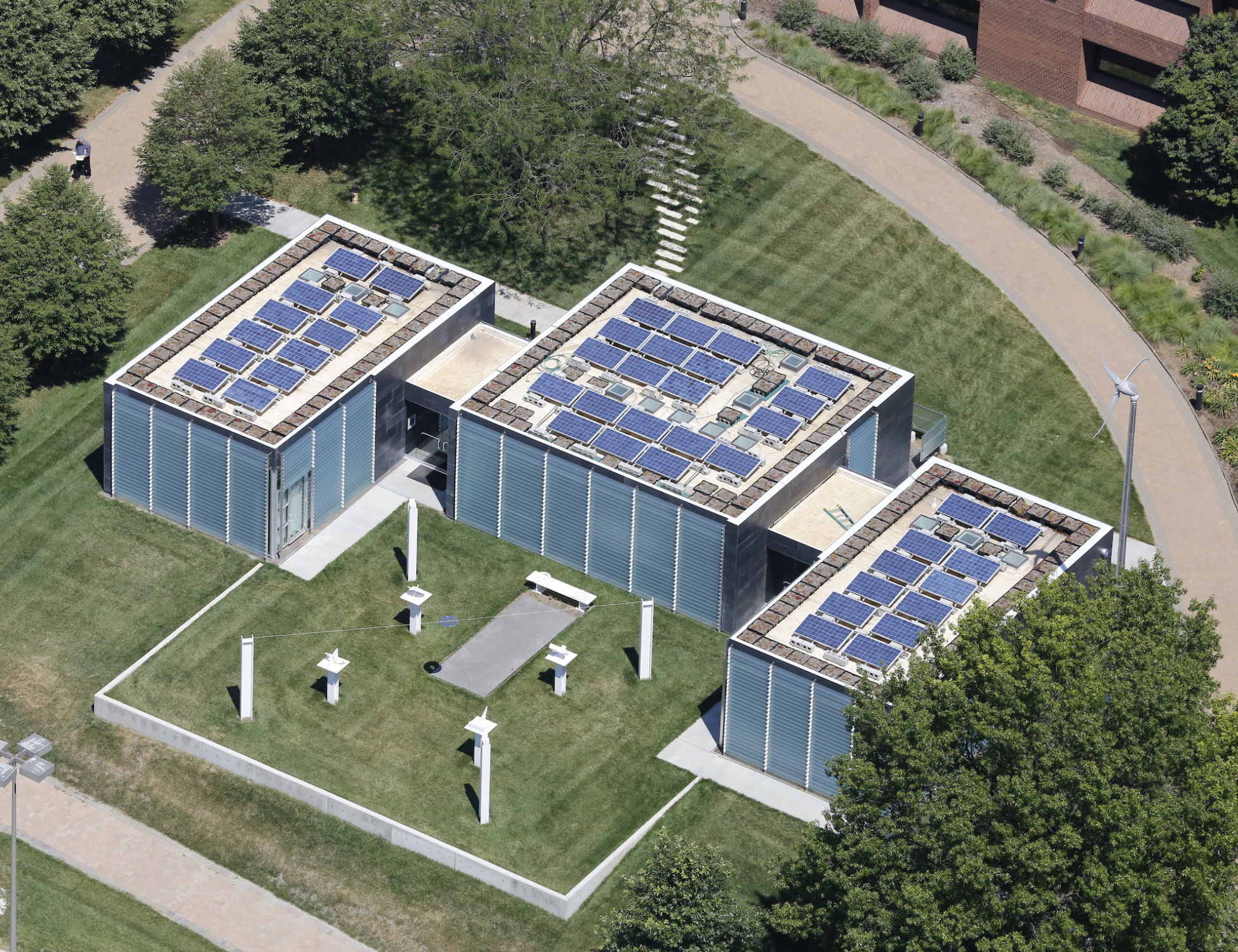
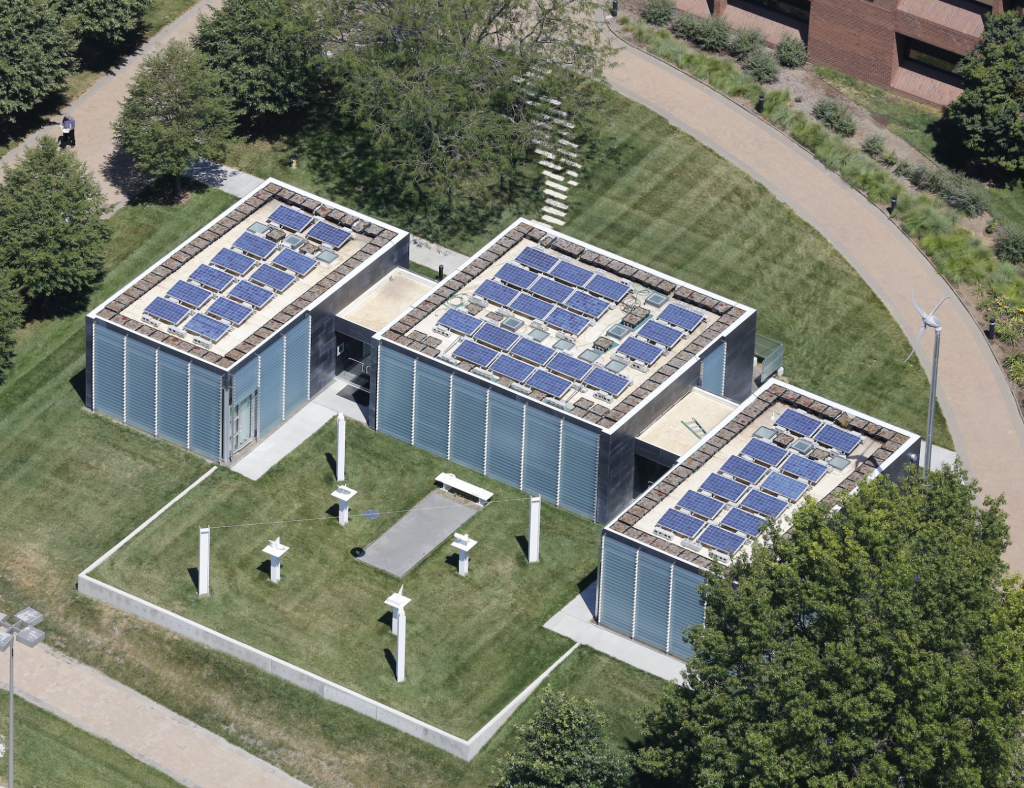
JCCC is working toward a zero-waste-to-landfill campus and achieving 100% renewable energy in line with its ambitious sustainability goals. The college has made significant strides, reaching approximately 90-95% renewable energy in recent years thanks to on-campus solar installations, energy-efficient practices, and the Renewables Direct program through Evergy contributing to an overall emissions reduction by 75%. However, the journey to zero waste has proven challenging, largely due to global recycling market shifts that limit local recycling options. “The zero waste goal is one that I think lots of colleges jumped on four or five years ago…until we have regional recycling infrastructure, it’s going to be challenging,” says Antle.
Despite these obstacles, JCCC has maintained a 64% landfill diversion rate, saving money and generating revenue through recycling. The college’s robust composting program, which has processed 932,000 pounds of food waste since 2011, has doubled the soil organic matter at Open Petal Farm, helping create a closed-loop system on campus.
Integrating Environmental Responsibility into Education
The Sunflower Project represents JCCC’s innovative approach to embedding sustainable practices within academics. Since 2013, over 80,000 students have enrolled in sustainability-focused courses. This integration occurs across disciplines, from environmental science to sociology and even language courses. For example, an advanced Spanish course had students analyze technical documents about energy in Latin America, connecting language learning with climate action. This cross-curricular approach helps students understand that environmental stewardship is relevant in all fields, a perspective they carry into their careers.
Through internships in disciplines such as materials management and sustainable agriculture, students apply classroom learning to real-world contexts, driving JCCC’s climate action goals forward. Antle notes that this hands-on involvement fosters a lasting impact: “Students get to be invested in their campuses and communities, seeing the tangible effects of their work.”
Looking Ahead: JCCC’s Path to Future Sustainability
JCCC’s sustainability journey is far from over. The college is actively exploring new initiatives like battery storage, smart irrigation, and expanded solar energy capabilities. Plans are underway to incorporate more native landscaping and improve bicycle infrastructure, making the campus increasingly eco-friendly. The college’s fleet is gradually shifting to electric vehicles, furthering its commitment to reducing carbon emissions. These efforts reflect a unique position for a community college that has already accomplished many milestones in climate action, allowing it to “plan and strategize” for the future rather than focusing solely on immediate, low-hanging fruit.
Conclusion: Students Leading the Charge for a Sustainable Future
JCCC’s climate action story is one of student-driven success and continuous improvement. Guided by the Center for Sustainability, students are empowered to create positive change actively, making JCCC a climate action model in higher education. As Antle reflects, “Part of my job here on campus is to be the chief hope officer. We try to show students, by the way we build and run our campus, that there are things people can do to improve environmental or sustainability problems.” JCCC’s commitment to environmental responsibility is, at its core, a commitment to inspiring hope and action, showing students and the community that they have the power to address the environmental challenges facing our world. This commitment inspires students to take ownership of their environment and drive JCCC’s legacy of sustainability forward. And with each new generation, JCCC’s legacy of environmental stewardship grows stronger, proving that a small college can have a big impact.