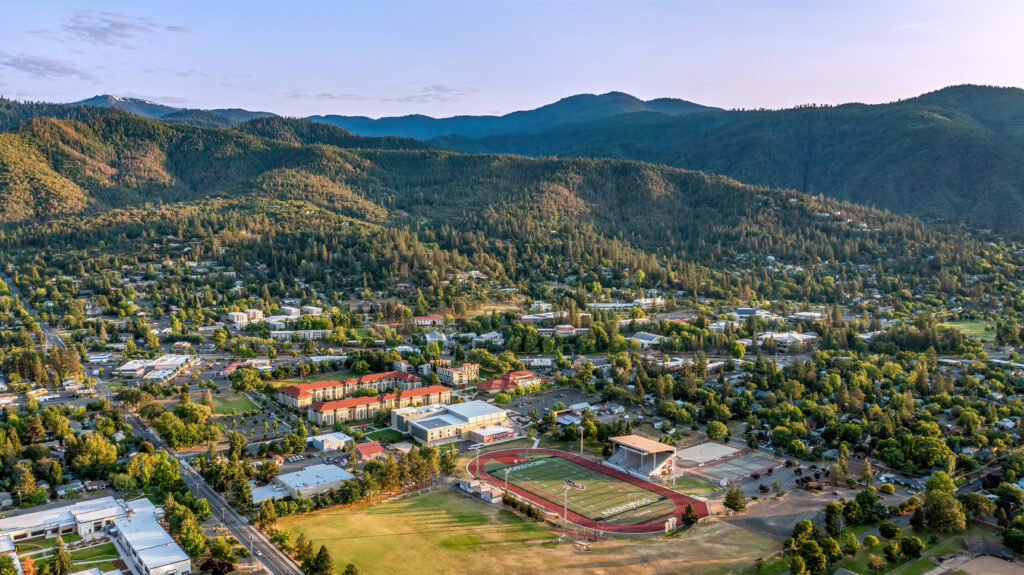
When wildfire smoke darkened the skies over Southern Oregon, daily life was abruptly reshaped. Extreme heat, power outages, and disrupted services revealed just how vulnerable communities can be and how essential trusted local institutions are in times of crisis. For Southern Oregon University (SOU), those experiences emerged as a turning point, clarifying its role not only as a place of learning but as a community anchor committed to resilience in practice.
That commitment is centered in the Institute for Applied Sustainability, which has developed as a hub for energy and local resilience work. During emergencies, the university operates under formal agreements with partners like the City of Ashland and local school districts, stepping in as essential regional infrastructure, feeding first responders, coordinating support, and providing safe spaces when other systems are strained. In Southern Oregon, resilience is not an abstract concept; it is a shared responsibility defined by lived experience.
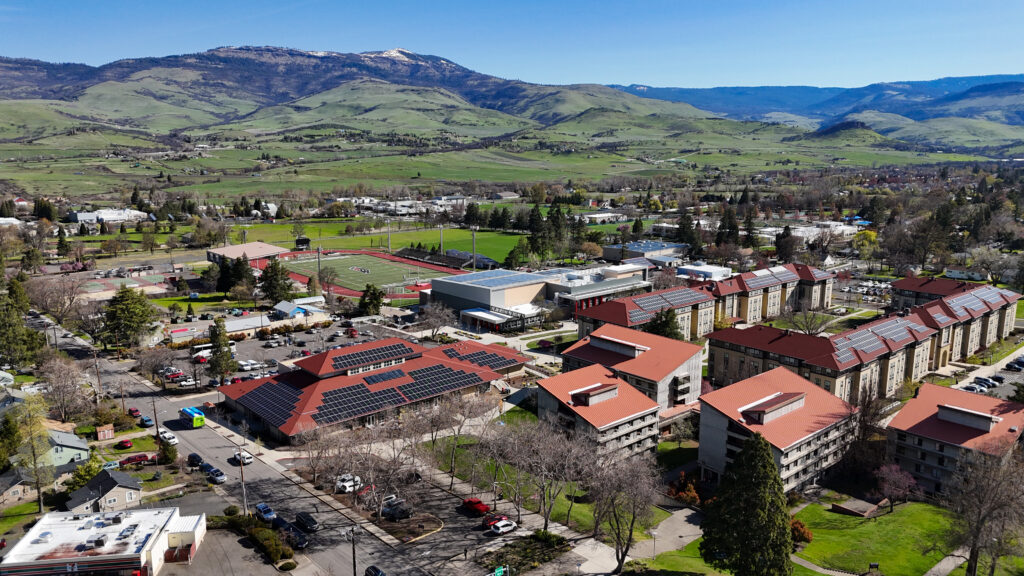
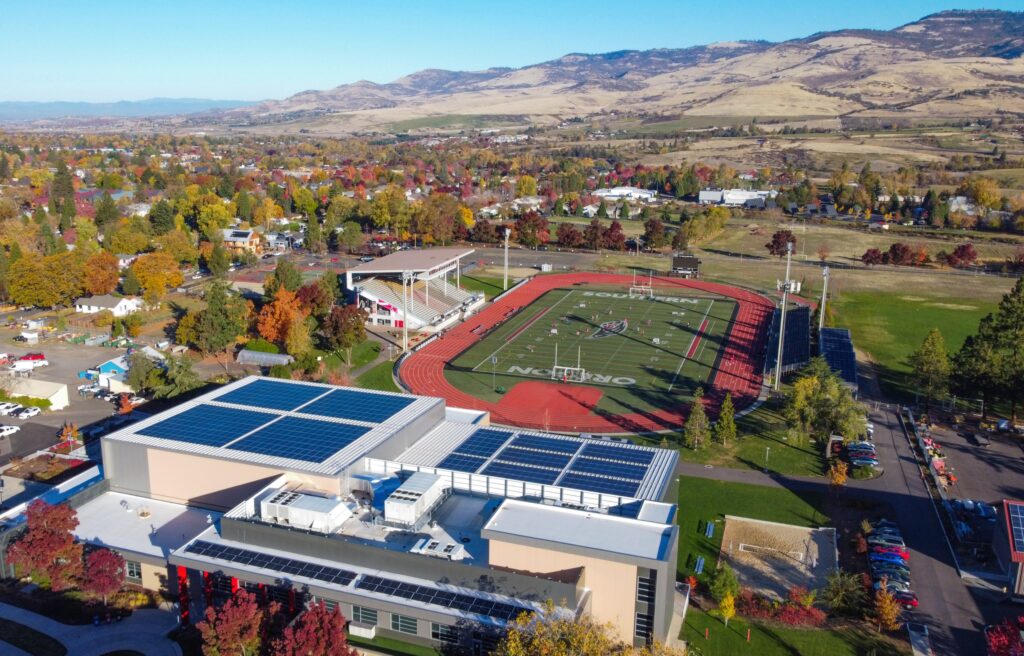
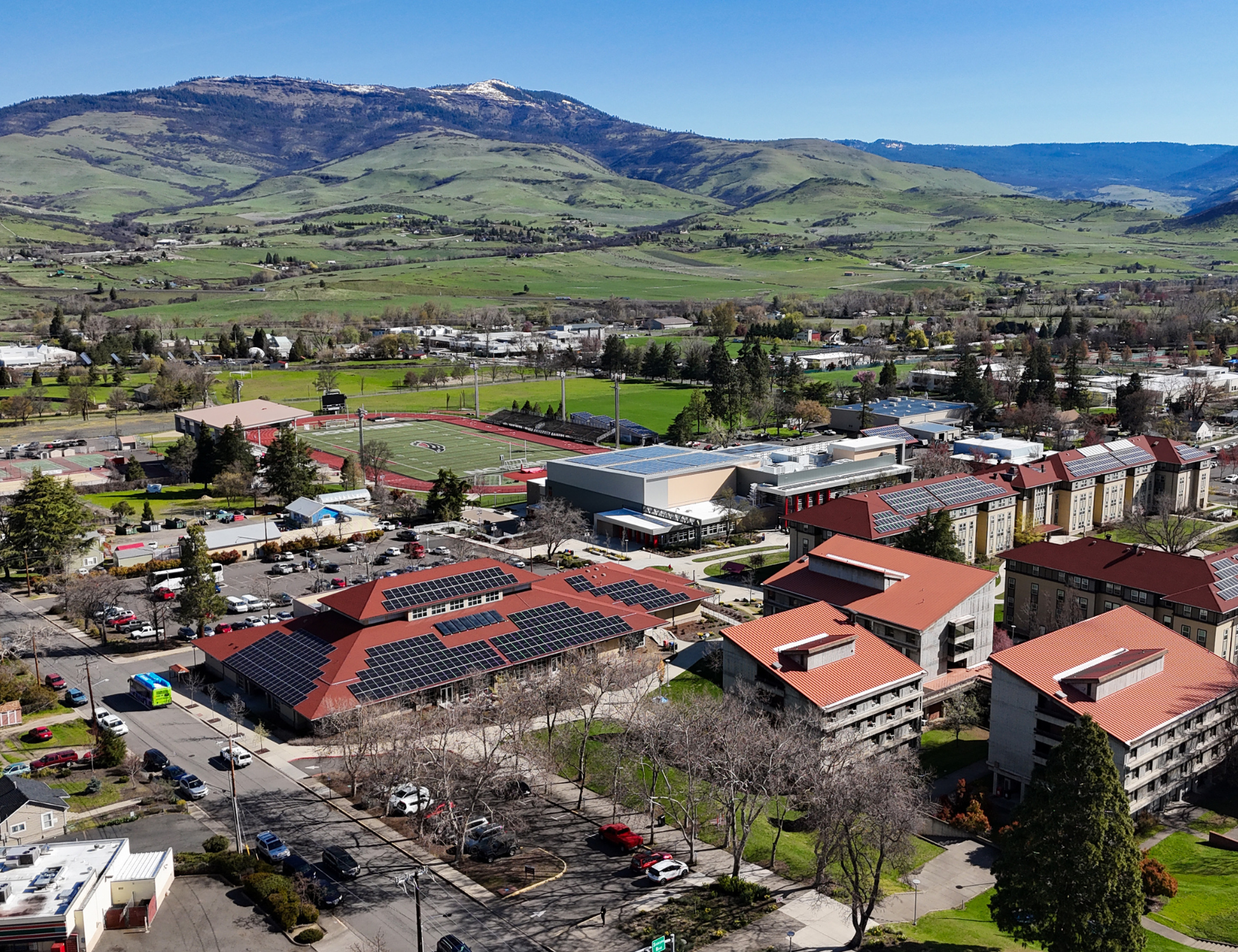
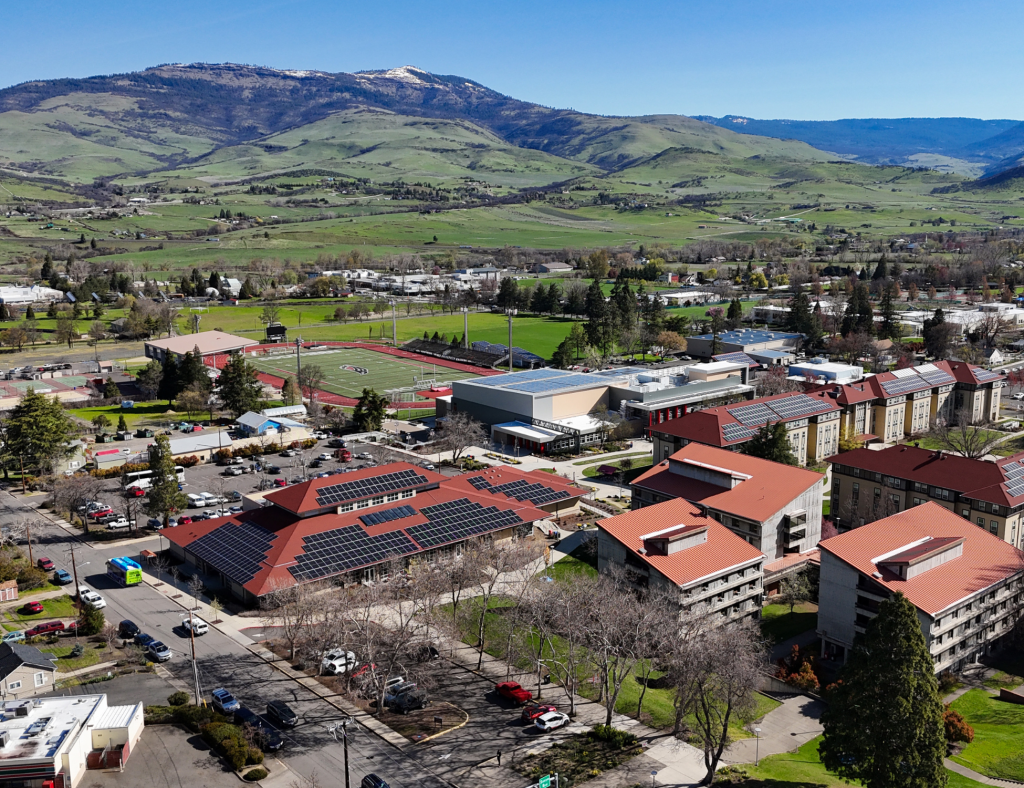
That same philosophy guides SOU’s approach to energy resilience. The university has steadily expanded on-campus solar generation, currently supplying about 12% of campus electricity, with a long-term goal of reaching 100% daytime solar power. This progress puts them on track to be the first US public university to reach this goal. Battery storage is being integrated not just to reduce emissions, but to ensure continuity during outages. These investments are designed to function on both “blue sky days and gray sky days,” serving everyday needs while standing ready in emergencies. Even neighboring community assets, like a children’s science museum with solar panels owned by SOU, are being considered for inclusion in future emergency management plans, expanding shelter-in-place capacity for first responders and community residents alike.
Together, this infrastructure forms the backbone of SOU’s living laboratory, an experiential learning model that intentionally blurs the traditional walls of the classroom. In this environment, students, faculty, and community partners learn side by side, merging academic theory with real systems, real buildings, and real community knowledge. Solar arrays, battery storage, and emergency planning are not just topics of study; they are the curriculum.
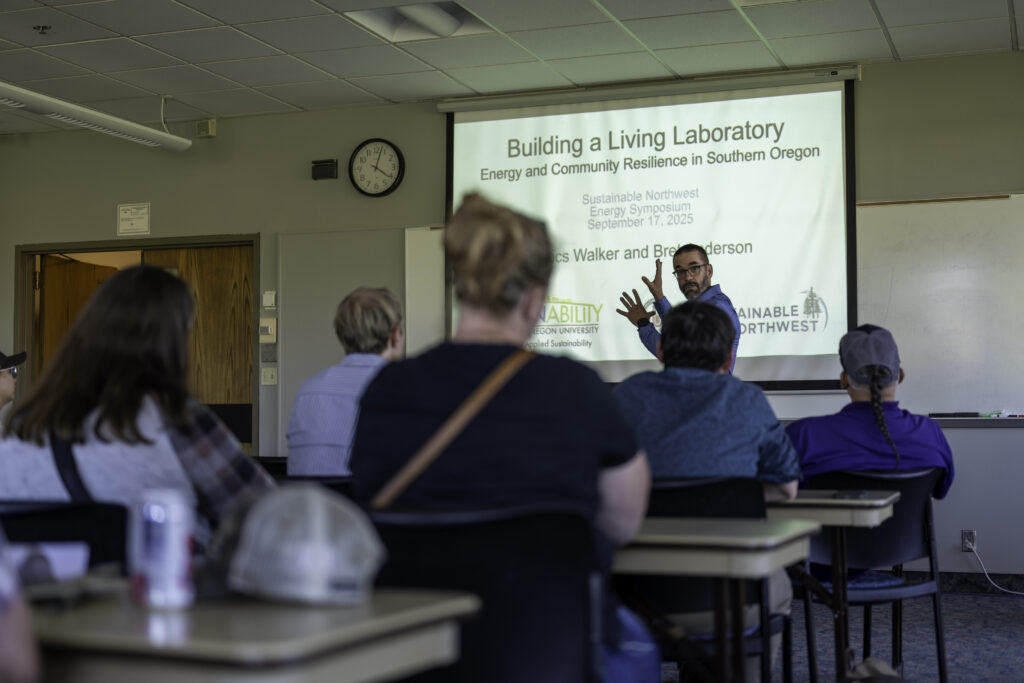
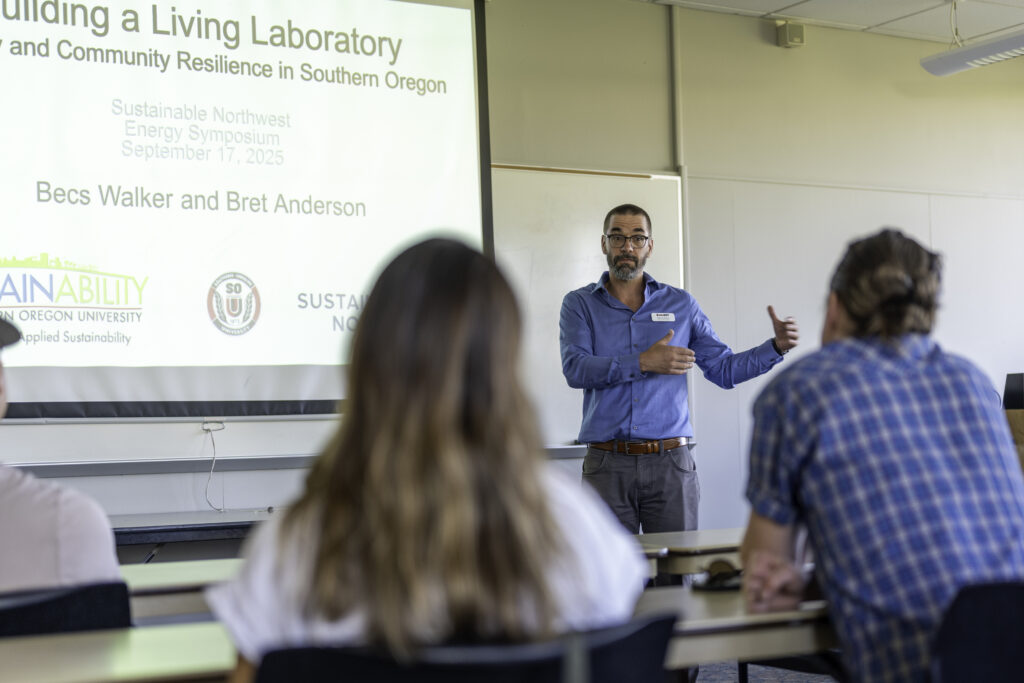
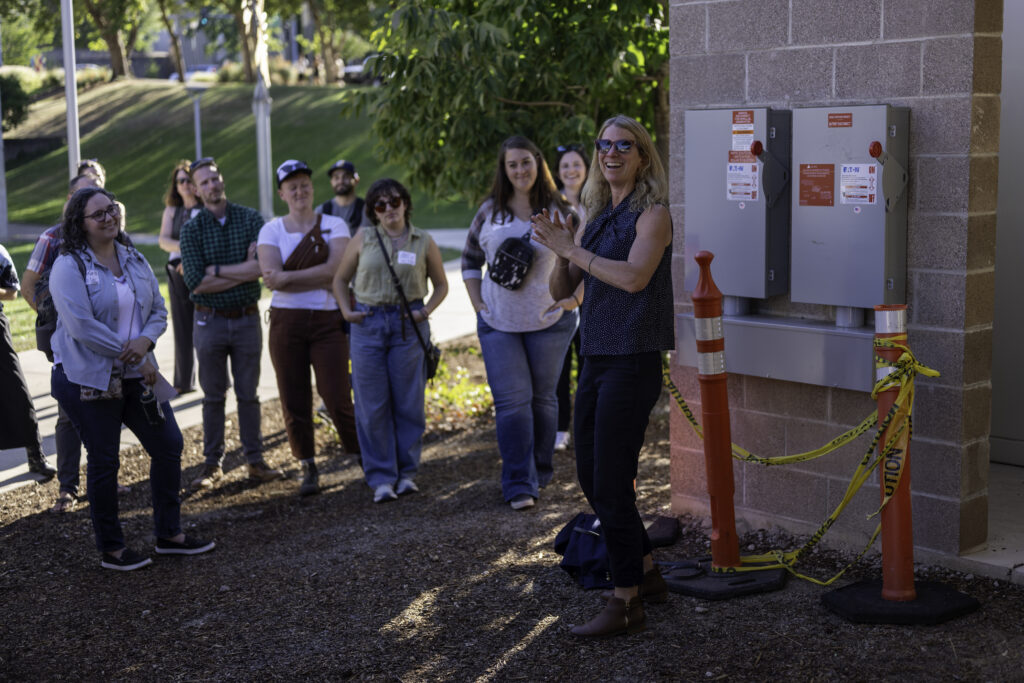
Fundamental to this living laboratory is the Community Resilience and Leadership (CRL) Student Fellows Program. Designed as a cohort-based, interdisciplinary experience open to students across majors, the program focuses on systems thinking, leadership, and applied skill development. Fellows participate in hands-on projects such as powering down campus buildings to identify energy and resilience gaps, assessing how systems perform under stress, and translating their findings into actionable insights for policymakers and community partners. Learning flows in both directions: students receive practical experience, and the community benefits from student-led analysis and innovation.
The impact of this work reaches well beyond campus boundaries. Insights generated through the living laboratory inform local emergency managers, community organizations, and decision-makers, positioning SOU as a regional convener for resilience rather than a passive participant. Just as importantly, the model offers a blueprint that other institutions in disaster-prone regions can adapt.
What began as a response to wildfire has grown into a scalable vision for the future—one grounded in renewable energy, deep community partnerships, and education that prepares students for complexity and uncertainty. At Southern Oregon University, resilience is not built alone. It is taught, tested, and strengthened together with the community it serves.