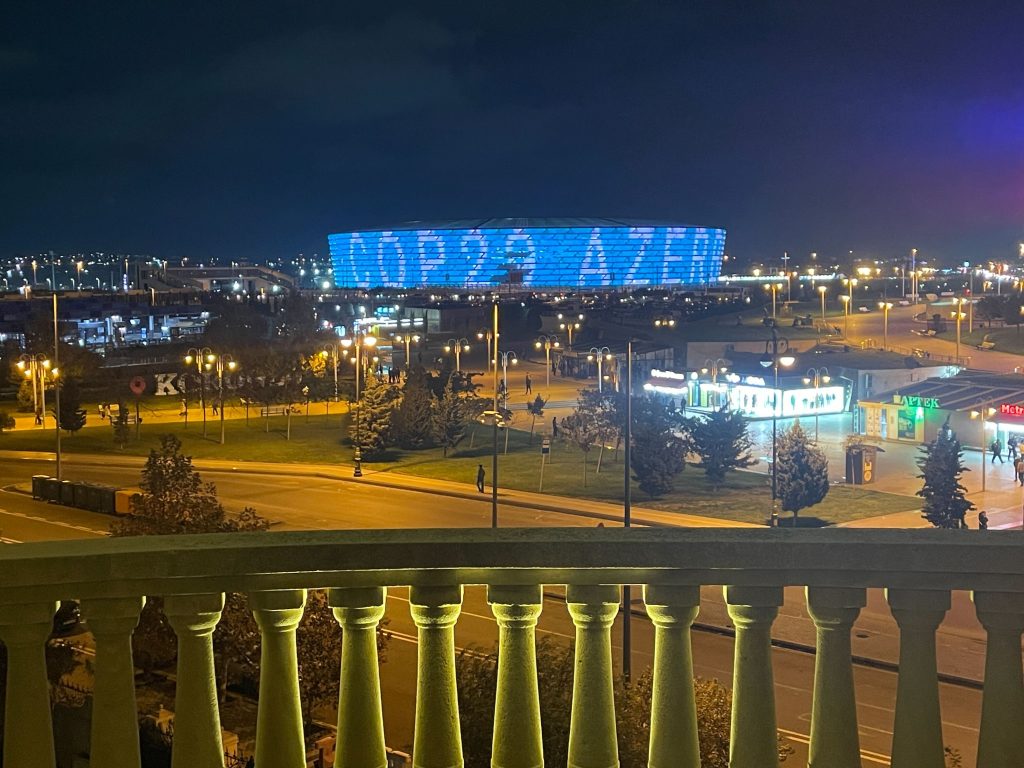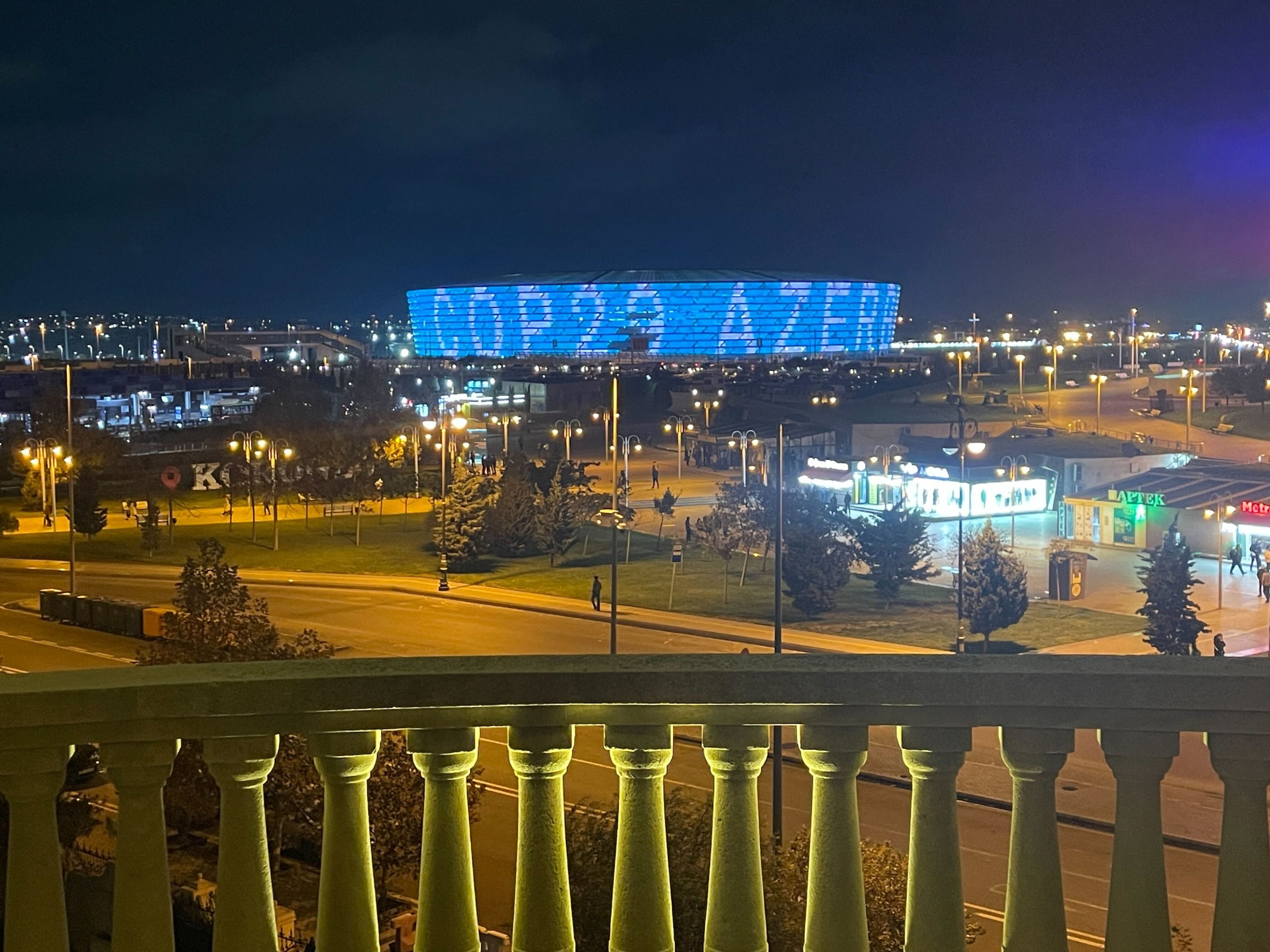

“How was COP29?” It’s the question on everyone’s mind for those of us who attended. I find it’s a complicated question to answer since there are many ways to approach it. After attending six COP conferences, I’ve found it helpful to set some goals in advance so that I don’t get overwhelmed, don’t try to do too much, and make the carbon burned from Boston to Baku make sense.
My main goals for this year’s conference, in order of importance, were:
- Understand how our domestic and international colleagues were responding to the election results in the United States
- Connect with higher education leaders to assess, anticipate, and plan subnational and international climate action in our sector
- Represent Second Nature, presenting the ways our work is accelerating climate action in the US higher education sector at formal and informal side events and providing opportunities for our members to have a presence at COP
- Be open to the serendipitous COP moments, inside and outside the venue, and experience different cultural contexts for impactful climate solutions.


In some ways, setting goals is the easy part. The obvious question after COP was how I did in meeting these goals, the harder part! Here’s my evaluation of how things went:
Goal 1: The big takeaway from my conversations about the election is that subnational governments (like cities and states) and other subnational entities (like higher education) will be critically important in any country where the national government is unwilling or unable to take a leading role. This points to the critical importance of our work both domestically and internationally.
Goal 2. It was wonderful to connect with international colleagues to discuss what we call the “Network of Networks,” which includes higher education network leaders working on climate initiatives from around the world. The group is primarily focused on ensuring that higher education supports each other, the COP Presidency, and the UN Climate Champions.
Goal 3. Second Nature co-hosted a panel at the America Is All In Pavilion and an official UN side event on the three missions of higher education. These events highlighted US and international institutions, including students from Ohio State University and the University of Connecticut, both of which are Second Nature member institutions. The events covered a wide range of successes and challenges our sector has had in driving climate action forward. Both events were well-attended, and we had some great follow-up discussions.
Goal 4. Baku, Azerbaijan, is a unique place. Like many COPs, the local community puts its best foot forward, and one of the exciting things this year was the number of college students who welcomed us and helped navigate us through the venue each day. The country isn’t without its problems, but how can you not enjoy a place with both a carpet museum shaped like a carpet and a miniature book museum with the world’s smallest book 🙂
COP was interesting, inspiring, challenging, and not a little exhausting…in short, everything I could hope for.
-Tim Carter, President, Second Nature