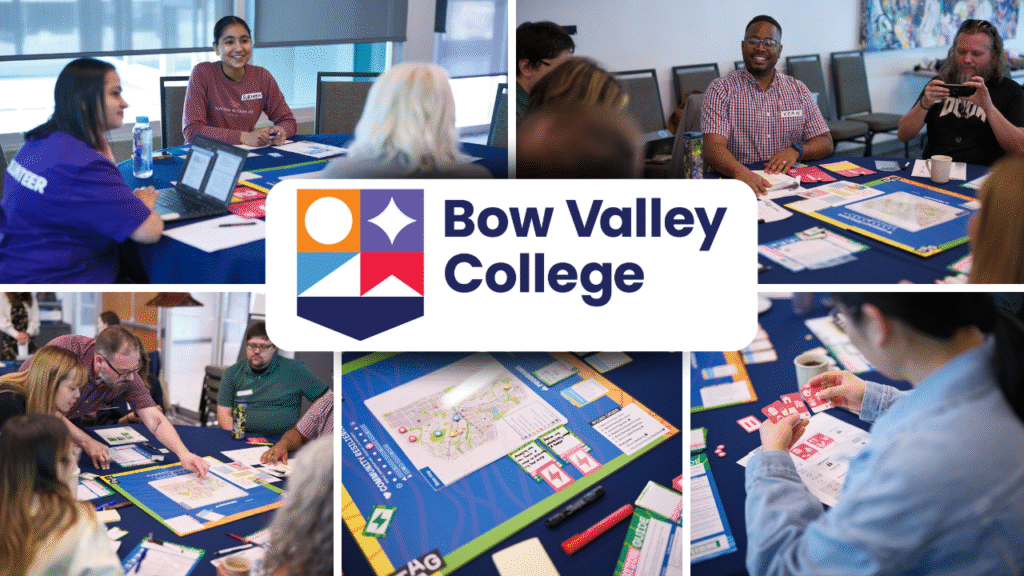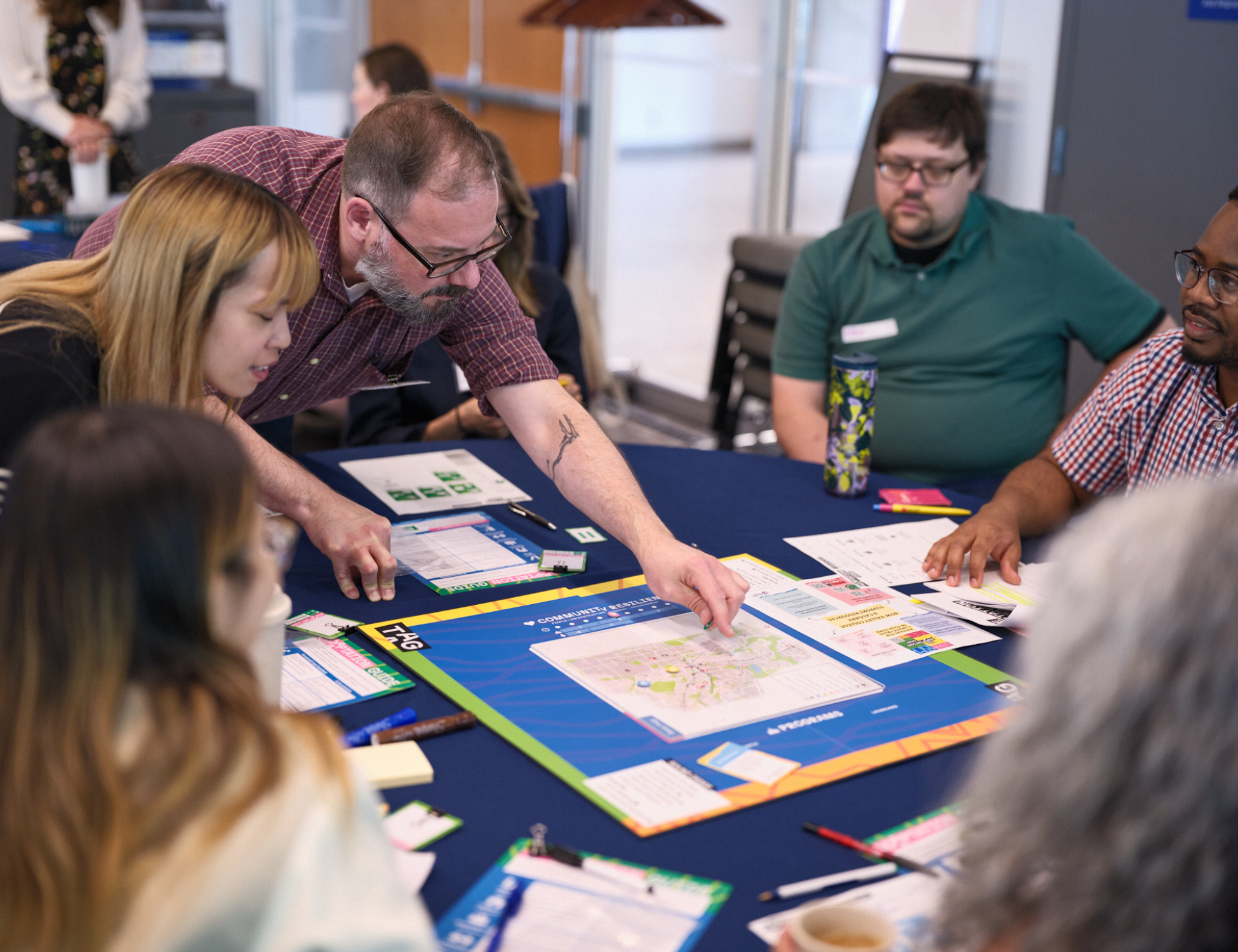
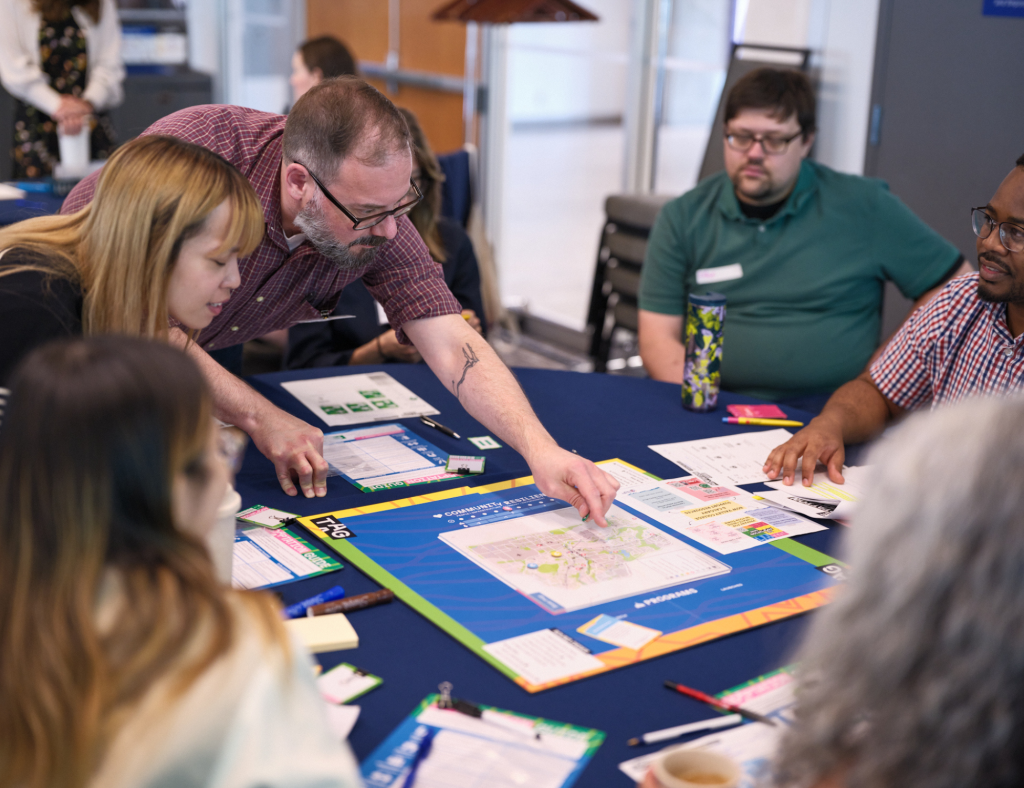
What if the future of your city were a board game, and the stakes were real? At Bow Valley College in Calgary, that question sparked action. This summer, the College introduced The Adaptation Game (TAG), a serious, story-driven tabletop game, to campus, inviting players to simulate how their community might adapt over the next decade to climate-related shocks such as floods, wildfires, or heatwaves.
TAG is as much about building connections as it is about planning: “It’s more of a platform for a community conversation,” not just entertainment, said one participant. The game transforms abstract global risks into local, narrative-driven scenarios, making climate change more human, tangible, and actionable. As one player summarized: “Woah, this is like real life stuff but we can do it from a safe space.”
On June 10, as part of a full-day “Climate Futures Game Jam,” over 75 students, faculty, and community members experienced TAG alongside creative game prototyping. In the morning, participants played TAG itself, an immersive, facilitated tabletop roleplaying session that brings systems thinking and roleplay to life.
Geoff Evamy-Hill, Applied Research Associate in serious games, reflected on what makes TAG compelling:
“The most important aspect of TAG is in its ability to build a real sense of agency and community amongst participants… Roleplay elements help people to see the consequences of their adaptations in changing circumstances.”
He added, “A game does not need to be perfectly realistic, but believable and immersive… making concepts stick, decisions matter, and outcomes feel powerful.”
After a compelling moment during gameplay, Amy Spark, Climate Specialist, recounted:
“A participant (a hiker) realized their fitness meant they could check on vulnerable neighbours during heatwaves by going door to door. They shared this with their hiking community, who responded positively. It reinforced that through games and conversations, people can discover unique ways to play their role in a crisis.”
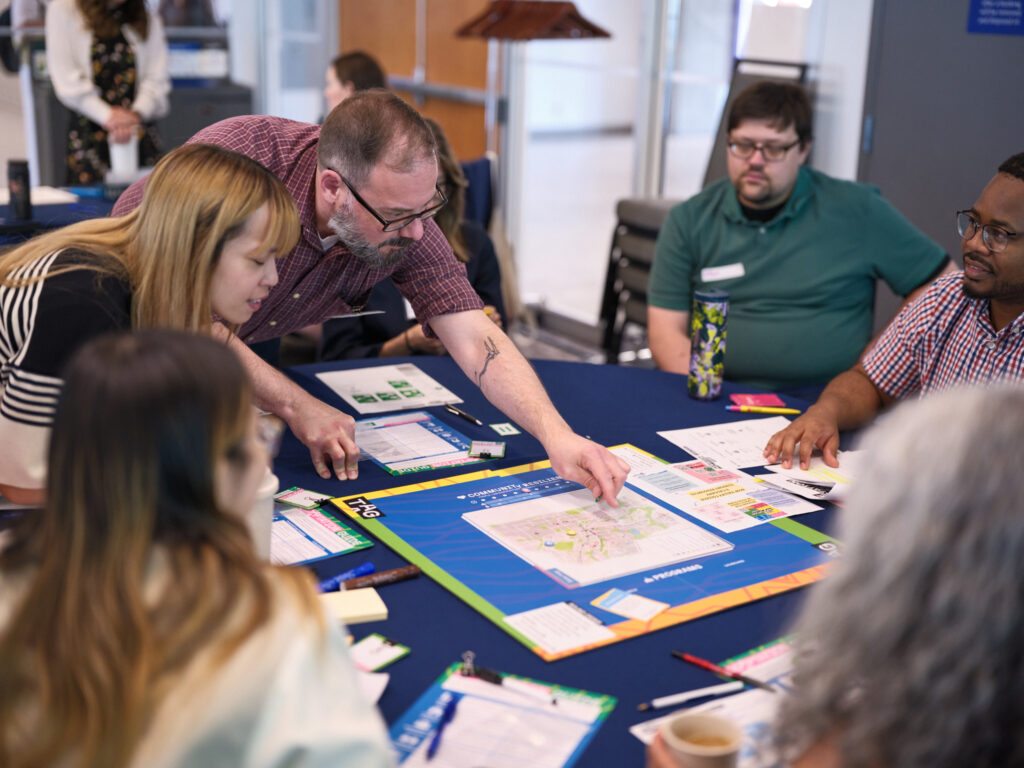

The afternoon Game Jam exploded with innovation. Six interdisciplinary teams developed game prototypes that explored themes such as wildfire response and food insecurity, ranging from dice-based tabletop games to collaborative digital platforms. Kern Babb, an Applied Research intern with a background in emergency management, framed his facilitation around the disaster management cycle, which includes preparation, mitigation, response, and recovery. He saw participants build a sense of agency and belonging: the experience “exposed participants to an environment where they became decision-makers,” he explained.
Nic Cross, another intern whose background is in mental health and peer support, added that TAG provides emotional grounding amid climate uncertainty:
“Games like TAG can give people a safe space to explore big… issues like climate change. That safety allows them to process emotions while staying engaged. You see people leaning in, asking questions, even laughing while working through serious scenarios.”
These insights reflect TAG’s core design values, created by its Australian founders at Amble Studios, which emphasize inclusivity, storytelling, community building, and reducing climate anxiety.
As climate threats intensify, Bow Valley College’s TAG initiative demonstrates an inventive path forward. Through play, people not only learn, they connect, build confidence, and take action. At Bow Valley College, climate resilience isn’t just taught. It’s played, prototyped, and put into action.