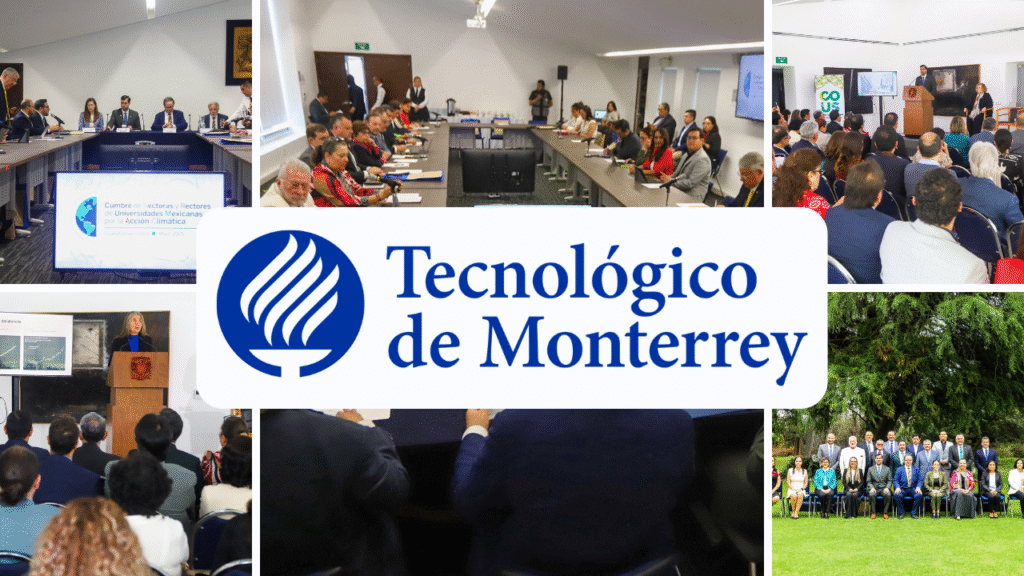

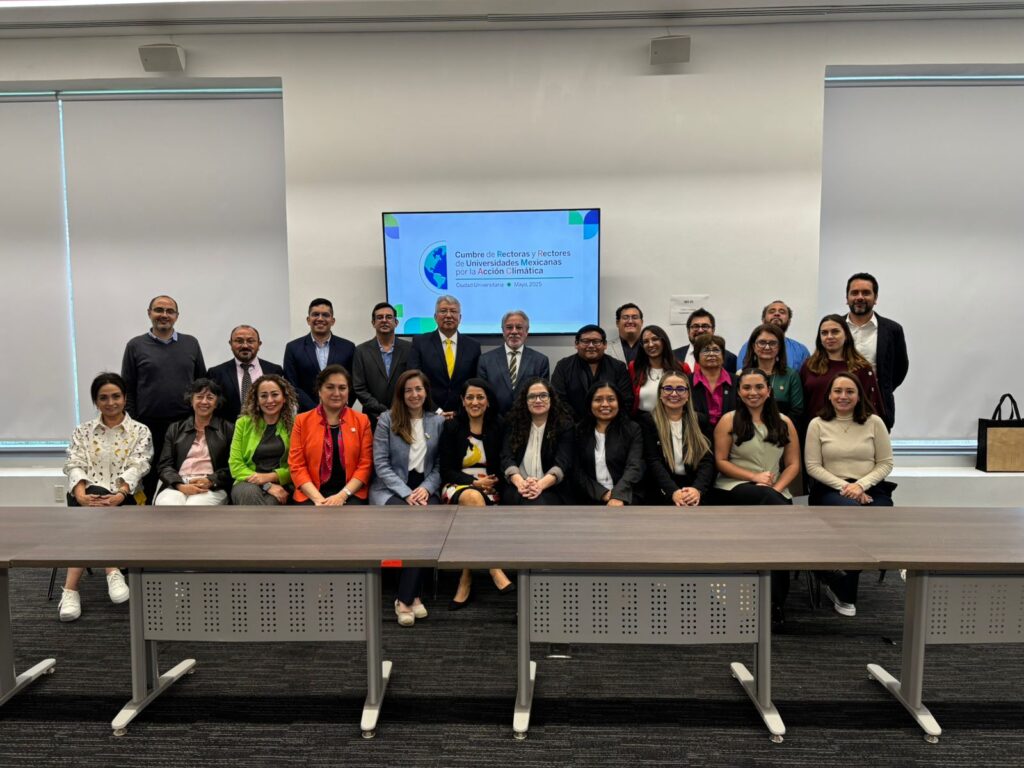
In the face of the accelerating climate crisis, 21 public and private universities across Mexico came together on May 26, 2025, for the Rector Summit of Mexican Universities for Climate Action. Hosted at Ciudad Universitaria in Mexico City by the Universidad Nacional Autónoma de México (UNAM) and Tecnológico de Monterrey, the summit marked a decisive step in higher education’s role in driving climate solutions.
This milestone moment had been years in the making. In 2023, Second Nature awarded Tecnológico de Monterrey a $10,000 Catalyst Grant, which enabled the first in-person meeting of Mexican Universities for Climate Action in May 2024. Fourteen universities gathered in Monterrey to set short-term goals for collaboration, and one of the main conclusions was that leadership buy-in from university rectors would be essential to mobilizing climate action across the country. Out of this insight, UNAM and Tecnológico de Monterrey proposed hosting a Rector’s Summit one year later.
The meeting culminated in the signing of a joint Declaration for Climate Action, committing institutions to urgent, coordinated efforts to reduce carbon footprints, adapt campuses to environmental risks, and prepare students to lead sustainable change through science, innovation, and policy. The day also marked the launch of the Mexican Network of Universities for Climate Action, an alliance aimed at coordinating academic, scientific, and community capacities to shape national climate policy and promote best practices.
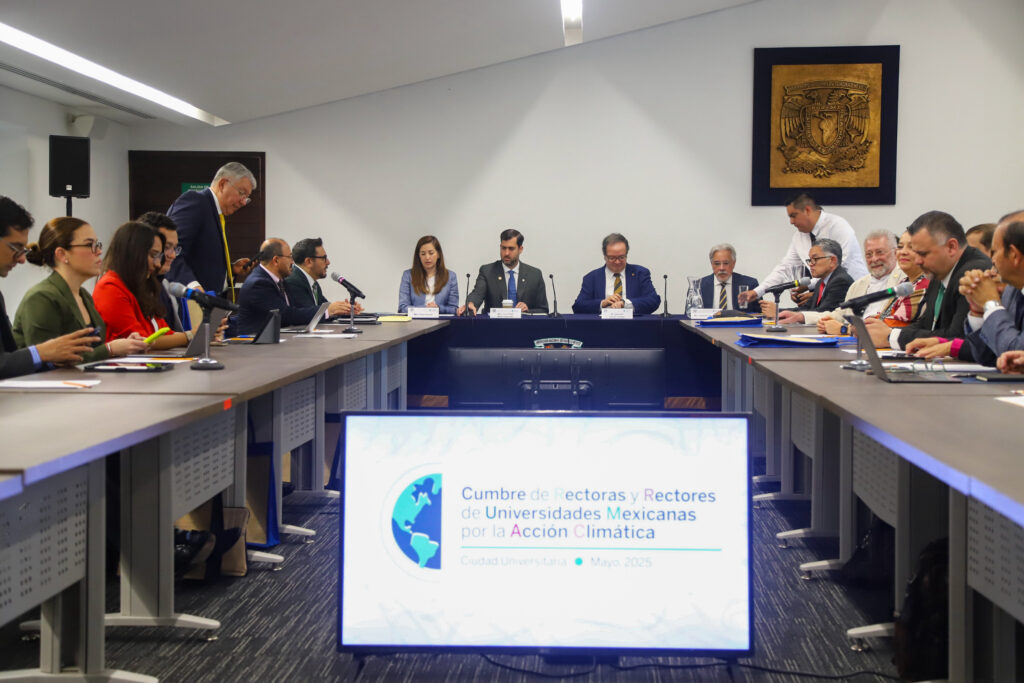

For Juan Pablo Murra, Rector of Tecnológico de Monterrey, the summit was about moving decisively from awareness to innovation-driven action. “For more than 30 or 40 years we have been warning of the environmental and climate crises… but it has not been enough to detonate the caliber and type of actions the situation demands,” he said. “Hope grows from seeing what my colleagues are doing in many spaces and with great enthusiasm.”
Leonardo Lomelí, Rector of UNAM, framed the crisis as deeply interconnected with justice and democracy: “The climate crisis is not only an environmental problem, but a matter of intergenerational justice, social equity, scientific sovereignty, and democratic deepening.” He stressed that declarations must be “translated into concrete policies, assigned budgets, rigorous evaluation mechanisms, and measurable results.”


One participant recalled a powerful moment behind the scenes: “Before the event, a draft of the final declaration was revised in a closed discussion between rectors. After a discussion between the universities, more ambitious phrasing and commitments were included. One example comes in the final paragraph of the roles of the universities, when having strategic teams for sustainability and climate action is mentioned.”
The declaration outlined four pillars of action:
- Education – Training informed, committed young people to build resilient societies.
- Research – Generating interdisciplinary knowledge and applying it to innovative climate solutions.
- Culture and Social Bonding – Promoting inclusion, dialogue, and collaboration.
- Institutional Management – Advancing sustainability strategies to reduce footprints and adapt to climate risks.
Environmental expert Julia Carabias, delivering the keynote, called for intensified cooperation among universities, stronger climate education starting in high school, and formal mechanisms linking academia with decision-makers. She urged participation in shaping Mexico’s climate policies and reminded the audience: “We are still in time.”
With the creation of the Mexican Network of Universities for Climate Action, these institutions have laid a collaborative foundation for change. As Inés Sáenz, Vice President of Inclusion, Social Impact, and Sustainability at Tecnológico de Monterrey, noted, the summit represents “a milestone in the collaboration between Mexican universities to work together for climate action.”
The message from the summit was clear: the window for action is still open, but it is narrowing. The question now is whether more institutions, and more sectors, will rise to meet this urgent call.