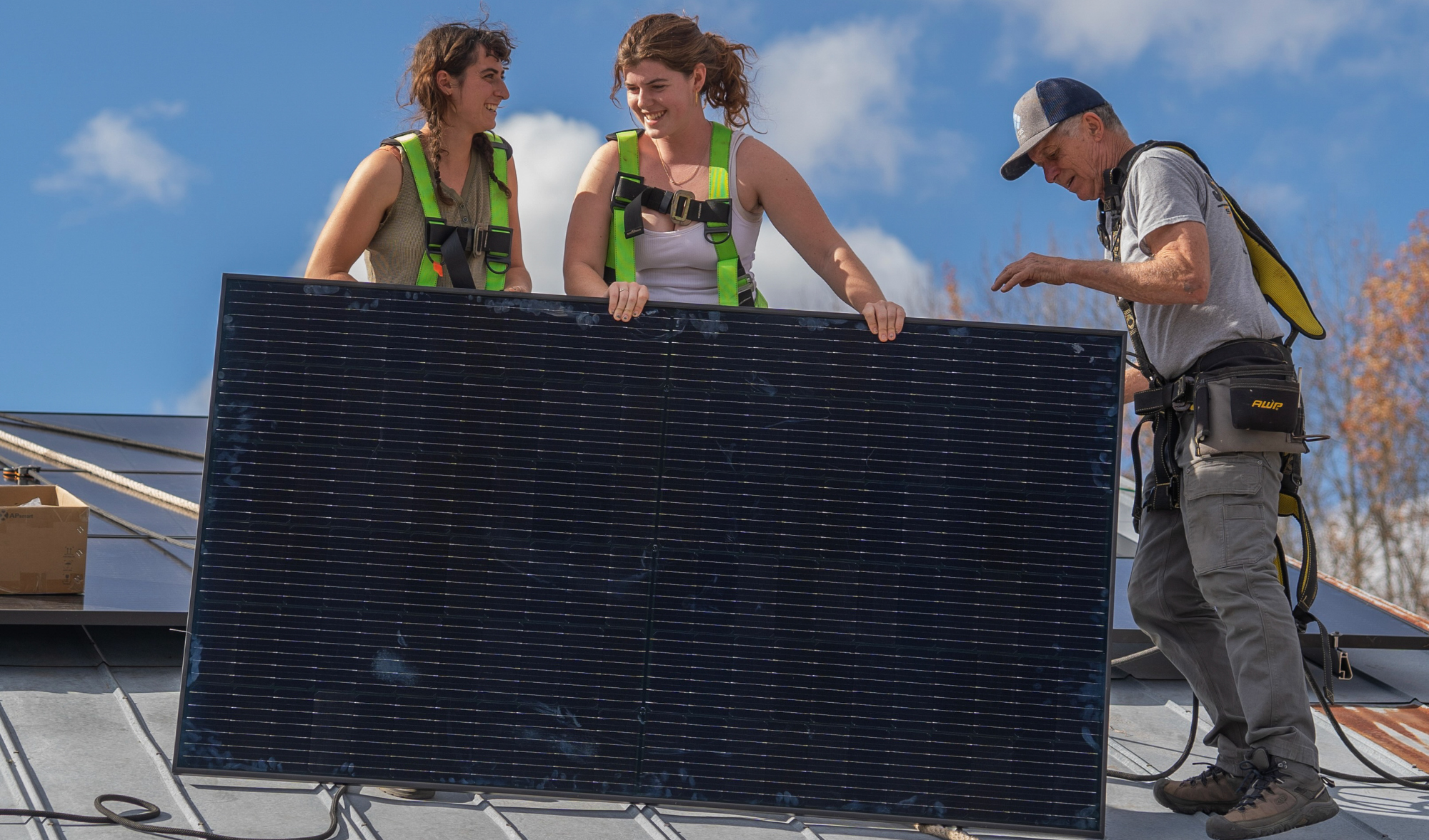
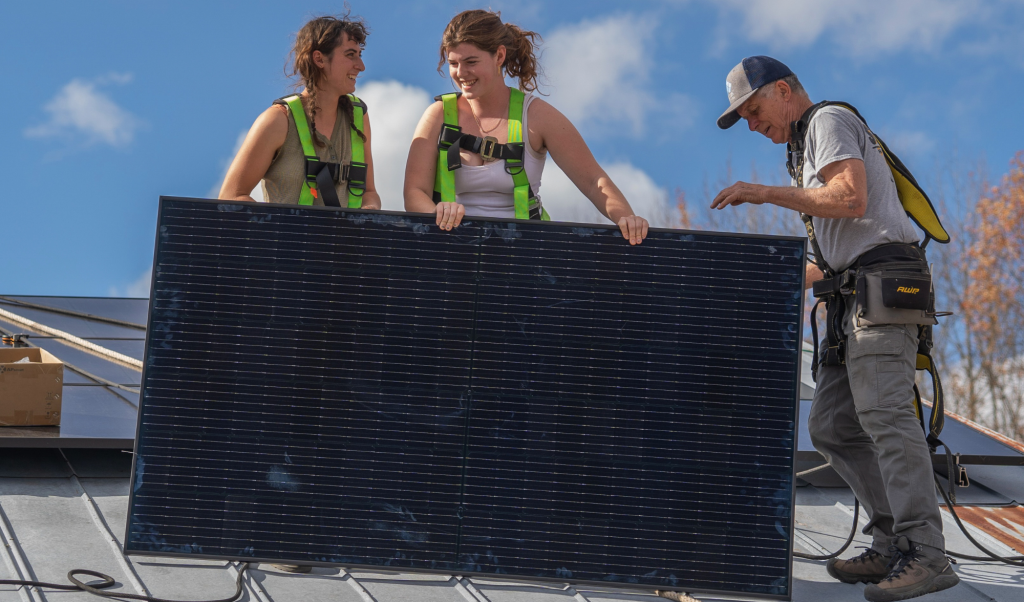
Warren Wilson College, located in Swannanoa, NC, is leading climate action in the Southern Appalachian Mountains through its Center for Working Lands (CWL). A working, learning, and living laboratory, the CWL is focused on land stewardship, education, and outreach. It engages students and local communities through experiential learning in sustainable agriculture, food justice, and land conservation. The Center aims to create a more inclusive and resilient world by integrating ecological landscape design and fostering sustainability leadership. Supported by a Catalyst Grant from Second Nature, Warren Wilson College is working on reducing greenhouse gas emissions and strengthening community resilience through innovative solutions.
A Catalyst for Change
Second Nature’s Catalyst Grant, along with support from the band Pearl Jam, and private donors, enabled Warren Wilson College to kickstart its decarbonization efforts. The grant facilitated the acquisition of a Solectrac electric tractor and the development of a solar-powered microgrid charging station.
“The Catalyst Grant really got us over the hump… it really was a catalyst because it helped us develop our first microgrid, which was the first big project we were able to do to demonstrate off-grid tractor technology. I would say in the truest sense, it was the catalyst for our decarbonization work at Warren Wilson College; it didn’t help us do something we were already doing – it jump-started a new project,” says Dave Ellum, Dean and Director of the Center for Working Lands.
This initiative marked the college’s first significant step in showcasing off-grid tractor technology, setting a precedent for further sustainable innovations on campus.
Community Engagement and Demonstrations
Warren Wilson College’s CWL is committed to engaging the local community in its climate action initiatives. The center hosts workshops and demonstrations where local farmers and landowners can learn about and test new technologies like electric tractors, solar charging stations, and electric work bikes. The primary goal is to minimize the upfront risk for landowners when adopting new innovations by testing and implementing these practices. This approach allows the Center to view risk as a form of research and education that benefits students and will enable landowners to observe and evaluate new methods before committing to them. “We allow people to come onto campus and try out some of these innovations,” Dr. Ellum explains, emphasizing the importance of hands-on experience in building community trust and understanding.
Innovative Climate Solutions
The CWL is an innovation hub that features projects like the Mobile Microgrid Work Vehicle (MMWV) fleet and agrivoltaic systems. The MMWVs, which are solar-powered and independent of the fossil fuel grid, demonstrate a sustainable alternative for campus transportation and farm operations. Additionally, the college is exploring agrivoltaics, which integrate solar energy production with agricultural activities, aiming to make the college’s 900 acres of agricultural land energy-independent.
Other innovations include high-intensity rotational grazing, which aids in soil carbon sequestration, and the testing of climate-resilient crops in collaboration with the Utopian Seed Project. These efforts contribute to environmental sustainability and provide economic benefits by reducing reliance on traditional fossil fuels and increasing energy independence.
Supporting Underrepresented Groups
The CWL is also committed to supporting underrepresented groups in agriculture. The college collaborates with organizations like Bounty & Soul and local Latinx markets, contributing to food justice initiatives. Moreover, Warren Wilson College provides educational opportunities for Pell-eligible students and those from diverse backgrounds, ensuring broader access to sustainable agriculture education and training.
Student Involvement and Education
Integral to the CWL’s mission is the hands-on student involvement. Approximately 135 students work with the center, gaining practical experience in sustainable land management practices. The college’s Cultivate Fellowship Program allows students from various academic disciplines to engage in climate-related projects, fostering a multidisciplinary approach to solving environmental challenges. Ellum notes, “It’s not going to be the science alone that will solve this problem; it’s going to be changing people’s behavior.” To further this goal, the center is developing a new climate and sustainability crew, including a specialized group focused on climate data collection and assessment, enabling students to integrate their work into their current academics and future careers.
Challenges and Looking Ahead
One of the significant challenges the CWL faces is changing public perception and behavior toward renewable energy and sustainable practices. Dr. Ellum acknowledges the difficulty of convincing stakeholders of the benefits of technologies like agrivoltaics. However, by demonstrating economic, ecological, and social benefits, the CWL hopes to foster wider acceptance and adoption of these innovations.
Looking ahead, Warren Wilson College plans to expand its educational outreach through initiatives like a summer climate summit and ongoing collaboration with local farmers and landowners. The college’s efforts aim to create a sustainable agriculture and community resilience model, with potential long-term benefits extending beyond the Asheville region.
Warren Wilson College’s Center for Working Lands exemplifies how academic institutions can be pivotal in driving climate action and fostering community resilience. By integrating innovative technologies, supporting underrepresented groups, listening to the actual problems local landowners are facing now and creating innovative solutions, engaging students in a multidimensional approach, and, perhaps the most impactful action, assuming the high risk of early adoption of new innovations that provides learning opportunities and protects landowners, the CWL is safeguarding the fabric of rural communities through energy independence and paving the way for a more sustainable and equitable future.