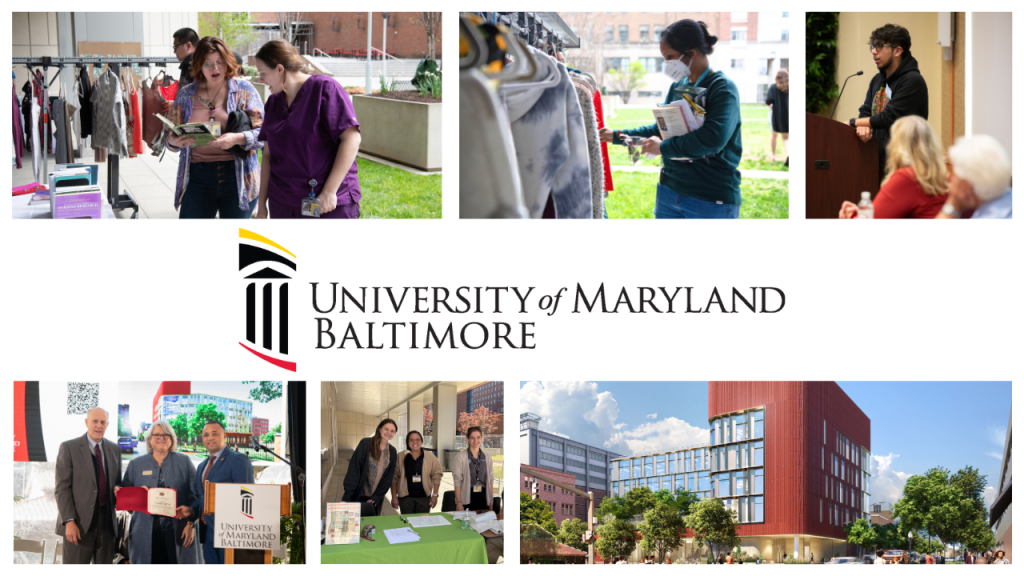
The University of Maryland, Baltimore (UMB) has embarked on a comprehensive climate action journey since signing Second Nature’s Climate Commitment in 2008. Focusing on carbon neutrality, renewable energy, and community engagement, UMB has made significant progress toward reducing its environmental impact.
Signing the Climate Commitment became a catalyst for accomplishing significant milestones in UMB’s sustainability venture. A vital initial win was “establishing a dedicated Office of Sustainability in 2021, transitioning UMB’s climate efforts from a volunteer-driven initiative to a structured program,” said Elizabeth Main, UMB’s Director of Sustainability and Special Projects. With full-time staff in place, the university has been able to accelerate climate action initiatives and institutionalize climate action efforts.
Advancing Renewable Energy and Conservation
UMB has achieved 100% renewable electricity procurement, exceeding state requirements. “It’s not just a one-time achievement—it’s something we’ve committed to doing annually,” Main emphasized. Additionally, in 2024, UMB signed its first on-campus solar power purchase agreement, which included installing a garage canopy with solar panels and electric vehicle charging stations.
Given its urban setting, UMB relies primarily on off-site power purchase agreements for clean energy. “With a campus in the middle of downtown Baltimore, space for renewable energy is minimal,” Main explained. “That’s why most of our clean energy comes from off-campus agreements or purchasing renewable energy certificates.” This further exemplifies that it is possible to make an impact even in unique spaces through creativity and imaginative solutions. This reminds us that there is no one-size-fits-all in this work, and finding new and innovative ways to utilize the tools, resources, and space available is critical to engineering more effective processes and creating change.
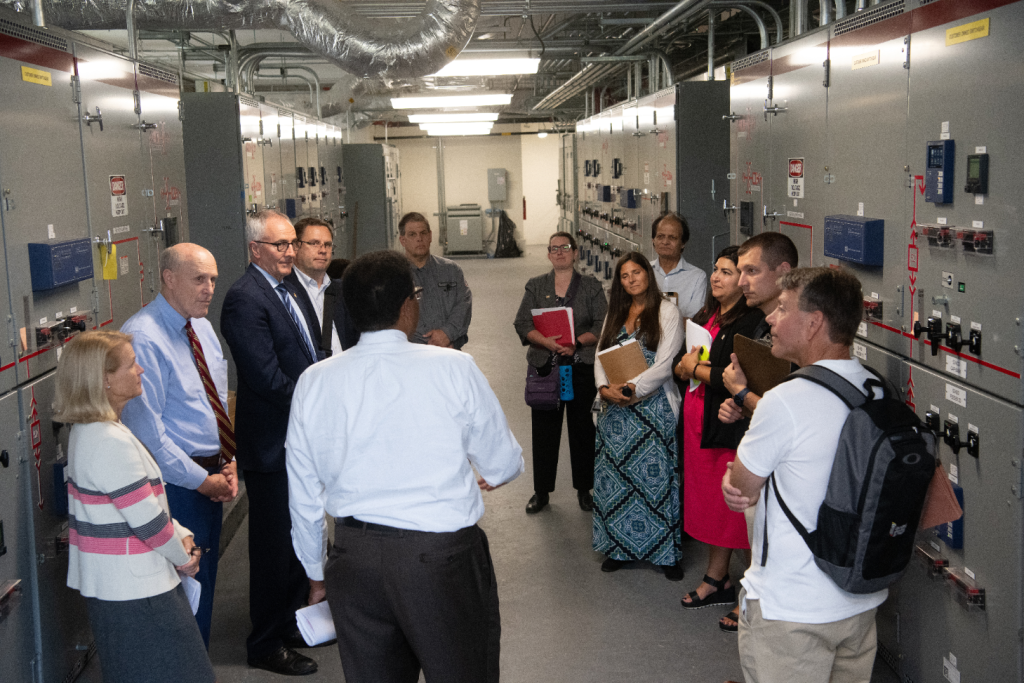
Energy efficiency has also been a key focus for UMB. During the COVID-19 pandemic, it took advantage of lower campus occupancy to implement energy-saving measures, particularly in research buildings. “Even though the campus has since repopulated, several of the changes we made in 2020 have been maintained,” Main noted. “Many of these efficiencies, such as improved heating, cooling, and air exchange systems, have remained in place, leading to lasting reductions in energy use.”
Sustainable Infrastructure and Transportation
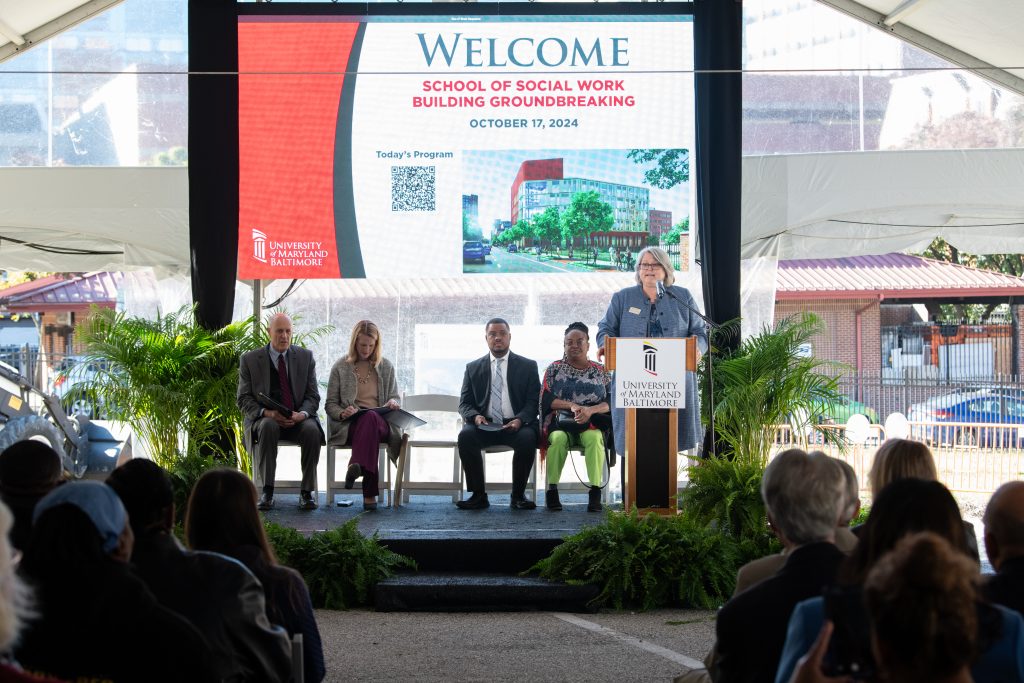
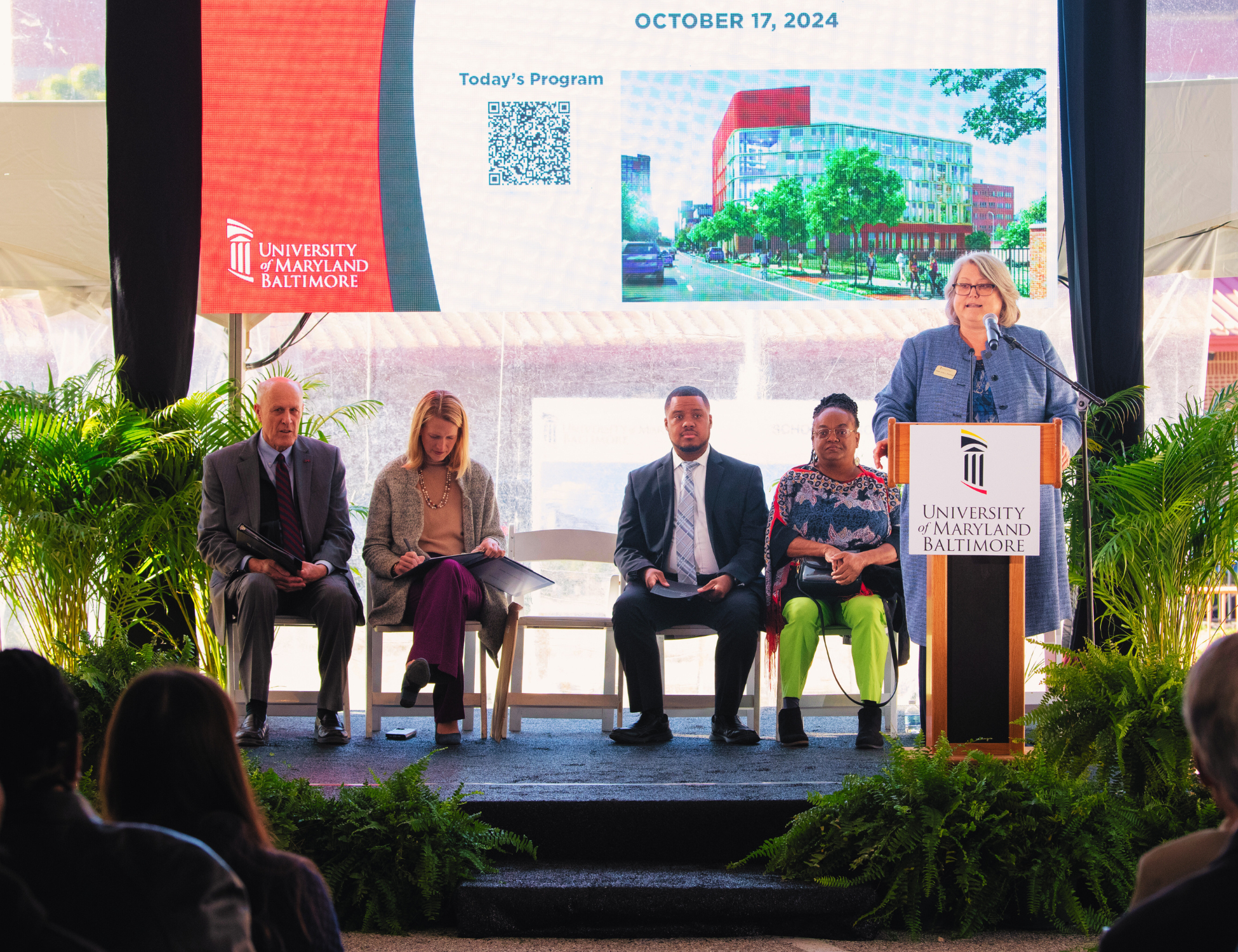
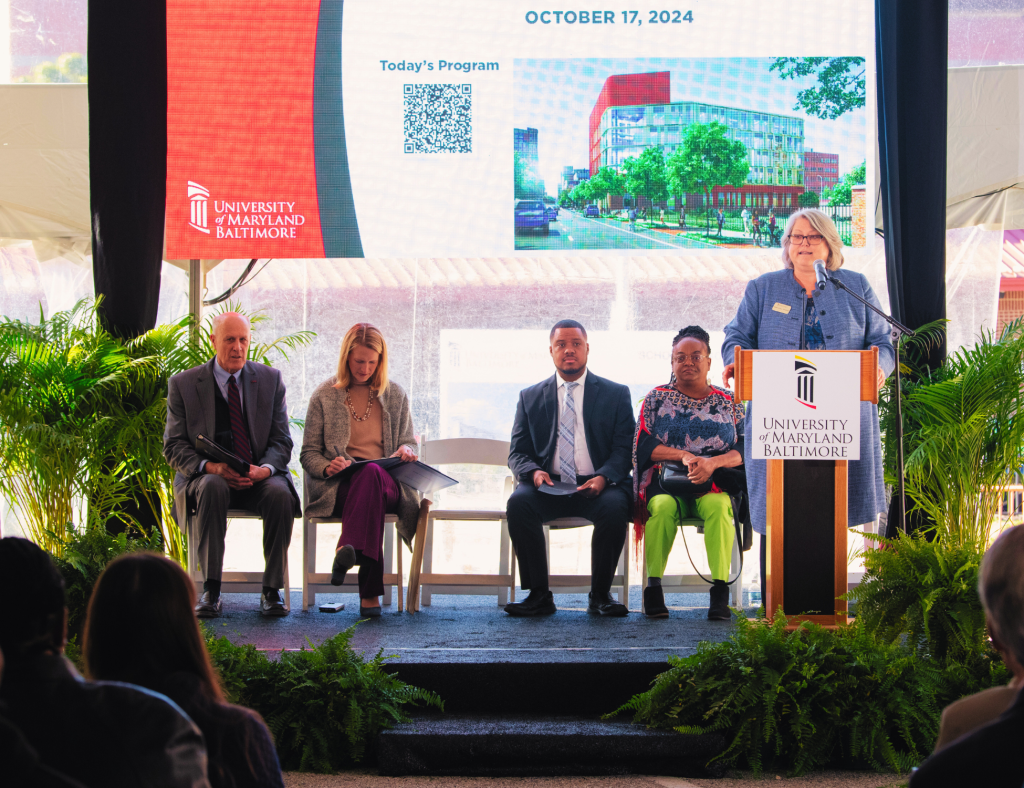
UMB’s new School of Social Work, currently under construction, aims for net-zero operational carbon and will be the first building in downtown Baltimore to feature geo-exchange wells. “That has been a huge milestone for us,” Main said. “We’re making sure that when we build new, we take into account the operational costs for the life of the project, and incorporating renewables as much as possible is one component of that life cycle assessment.”
UMB promotes sustainable commuting through free Maryland Transit Authority passes for faculty and staff and the Live Near Your Work program. “Many of our employees and students use public transit, bike, scooter, or walk to campus because of how well connected the campus is,” Main said. The university’s Live Near Your Work program further reduces commuting emissions by incentivizing employees to purchase homes near campus.
Engaging the Campus Community
Climate action at UMB extends beyond operations—it’s embedded in academics and student initiatives. The Interprofessional Climate Change Health and Society Consortium, founded by faculty across multiple schools, introduced the first climate change-centric course at UMB. “Ensuring that we have an educational component on climate change has been a significant move in the right direction,” Main noted.
Student involvement is equally vital. Organizations such as Medical Students for a Sustainable Future have spearheaded projects like the student garden, providing hands-on opportunities for students to engage in environmentally conscious practices. “A group of students started our community garden,” Main shared. “It may not have existed without their initiative.” These endeavors enhance campus sustainability and foster a sense of environmental responsibility among the student body.
The UMB Office of Sustainability encourages staff involvement and participation through collaborative networks like UMBuy Nothing, a campus-specific gift economy, and a Bike Commuters forum. All events hosted by the Office of Sustainability are open to the entire UMB community, and the most significant percentage of attendees at these events, including lunch and learns, campus cleanups, and open houses, are staff.
Looking Ahead
As UMB progresses toward its goal of complete carbon neutrality, future efforts will focus on decarbonizing the campus’s winter heating load, currently supplied by steam from an external provider. “We received a grant from the Maryland Energy Administration to help us plan for this transition,” Main said. Additionally, UMB plans to intensify its focus on tracking and reducing Scope 3 emissions, addressing indirect emissions from procurement and supply chains. The university benefits from Maryland’s progressive climate goals and purchasing requirements, which support adopting sustainable practices. “We’re lucky to have support from the state of Maryland, a president passionate about sustainability, and sustainability as an official university core value” Main said.
Research is a significant component of UMB’s operations, and the university is prioritizing green labs engagement to promote energy efficiency in research spaces. By addressing energy-intensive equipment and practices, UMB aims to reduce emissions while actively involving the campus community in climate action efforts.
The University of Maryland, Baltimore, exemplifies a holistic approach to climate action through strategic planning, innovative projects, and active community engagement. Its ongoing initiatives and plans underscore a deep-rooted commitment to achieving carbon neutrality and serving as a model for environmental stewardship in higher education.