For the first time, the COP was held in the Amazon. Personally, it was my first time visiting South America, a brand new cultural experience (In case you were wondering…no, a basic knowledge of Spanish doesn’t get you any closer to understanding Portuguese, but after being there for two weeks, I had “obrigado” nailed down!).
Week One: In Rio De Janeiro
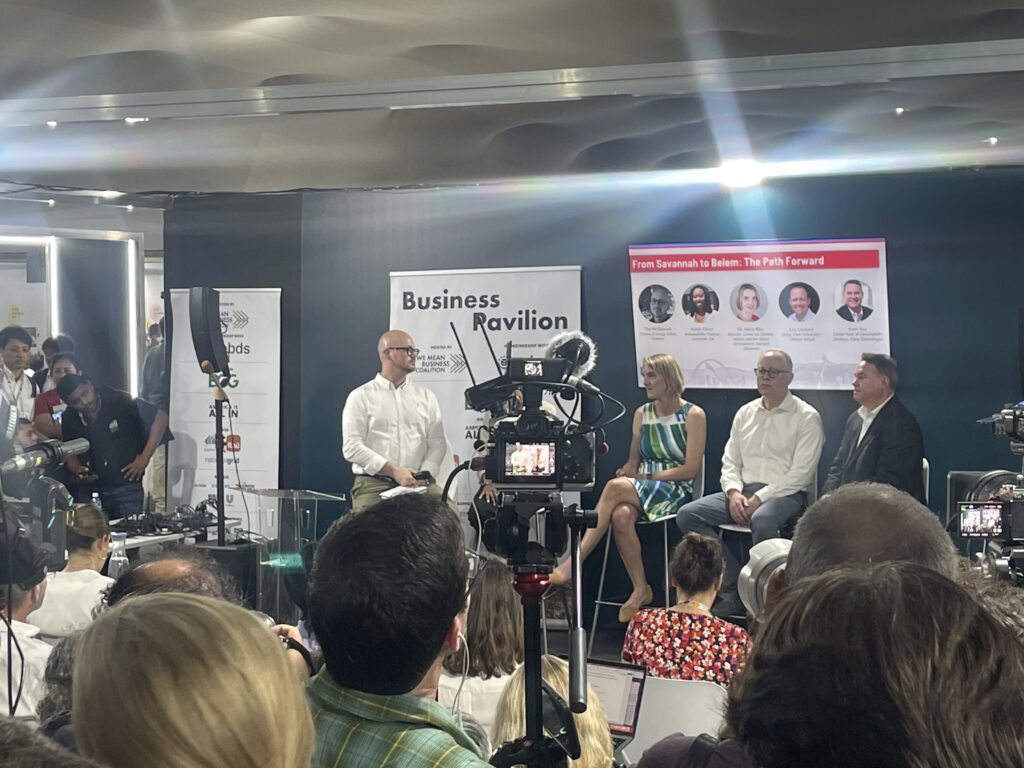
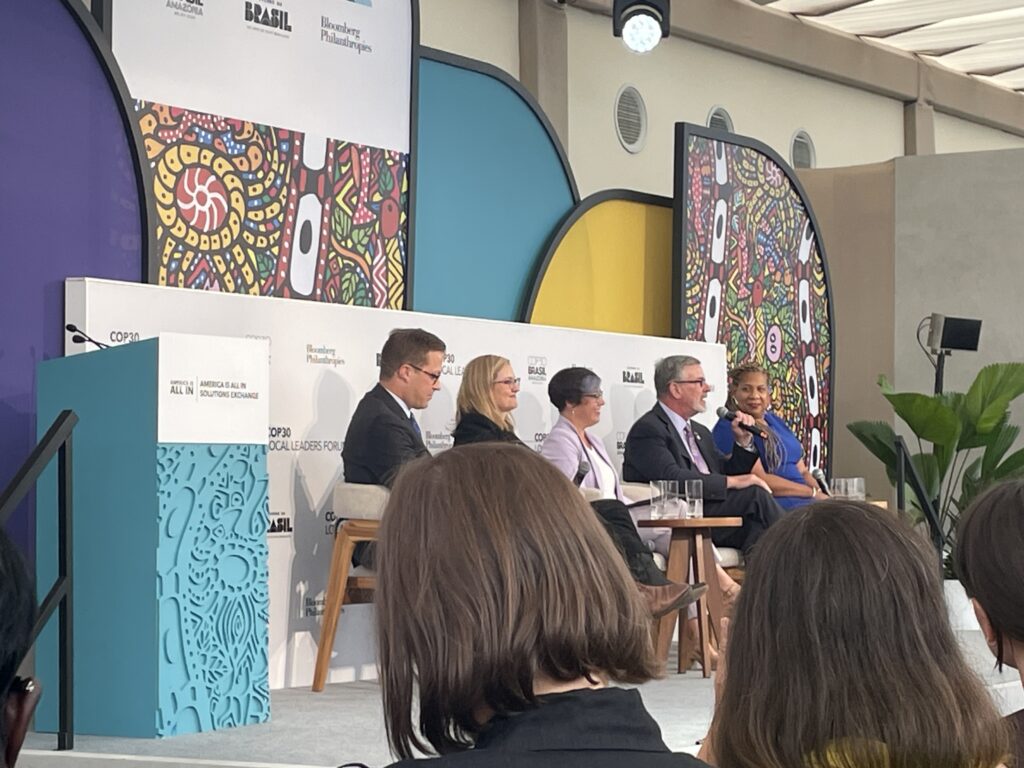
I spent my first week in Rio representing the America Is All In coalition at the Local Leaders Forum (LLF) – a celebration of climate leadership in cities that was elevated this year, given the 20th anniversary of C40 Cities. As a signature event supported by Bloomberg Philanthropies, the production value was off the charts. Lots of high-profile mayors and city staff from around the world were in attendance, ensuring their city’s climate bona fides were well represented. The London mayor’s outspoken critique of Trump as a “climate wrecker” (vs. himself as a “climate defender) spread throughout the event and gained purchase as the phrase du jour. It’s not untrue, of course, but it was a bit surprising to hear someone be as outspoken as he was towards the American president. There was no fearful, political sugar-coating his message.
The LLF was a good reminder, particularly in the US context, that mayors are not as beholden to the same political forces as some others may be. Clean air projects that directly improve the health of city residents will be popular with the constituents that mayors care about most. The primary, observable political force was that mayors were racing to outdo each other…“I see your car-free zone, and I raise you an EV bus fleet with a million newly planted trees”—the positive competitive flywheel of civic climate action.
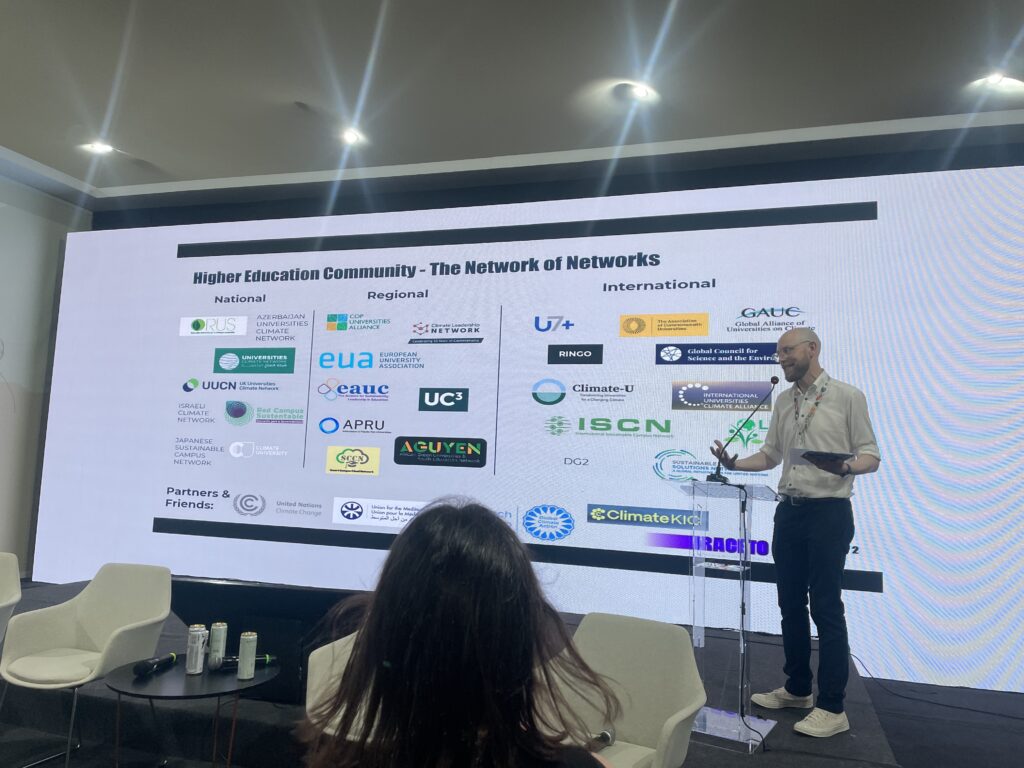
Interestingly, while cities were the stars of the LLF (it was C40’s show, after all), there was relatively little said about the role of other sectors in either aligning with or supporting city climate goals. I get it, but it also seemed like a missed opportunity to highlight not only subnational government leadership but also the supportive sectoral infrastructure that could be mobilized to support civic goals. Working with higher education institutions, I’m clearly biased, but I also get a bit impatient with sectoral introspection and myopia when it comes to issues that could clearly benefit from cross-sectoral interventions, as we’ve written about in the past. And that was week one at the LLF in Rio.
Week Two: In Belem for COP30
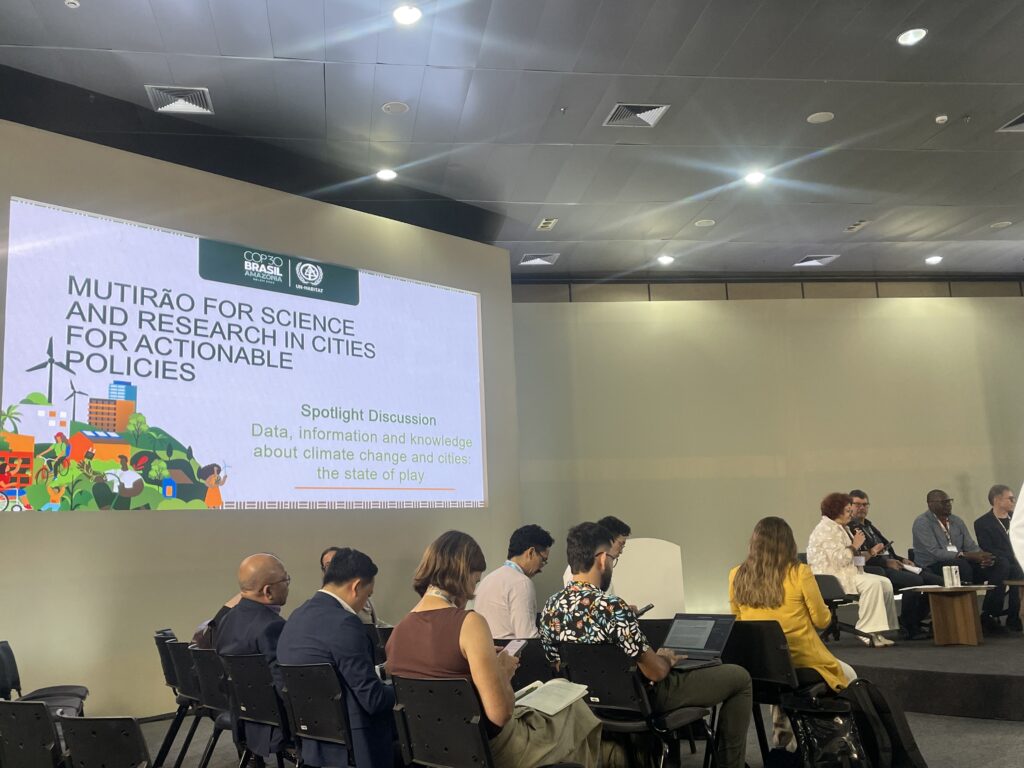
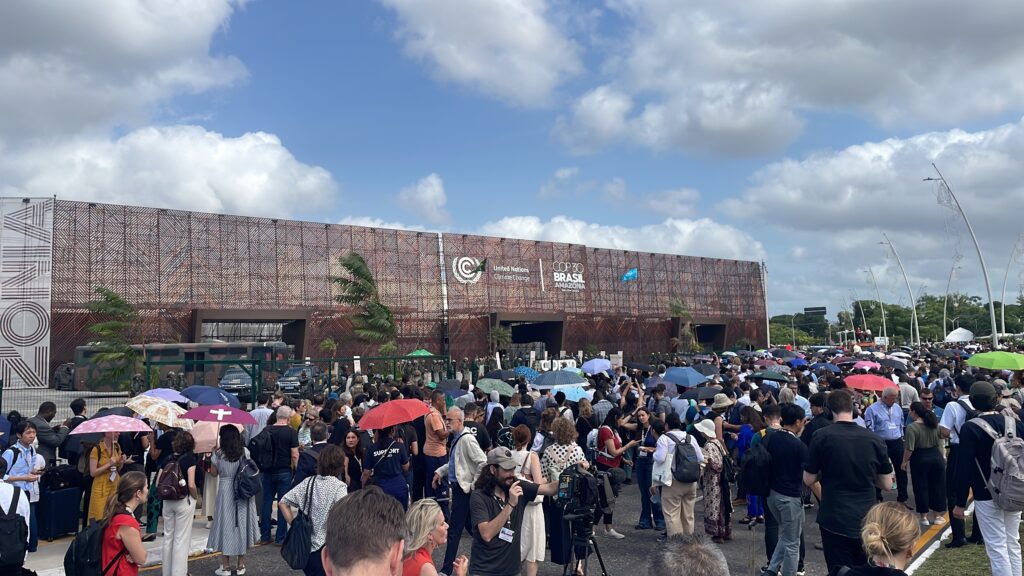
Week two shifted gears up north to Belem for the big show: COP30. I’ve written before about the three circles of COP and the different cultures that exist within each, and once again, I found it a good orienting framework for first-timers. This year, the “third circle” was particularly salient and vibrant. Belém is a gateway city to the Amazon, and the region’s rich culture was on full display. Additionally, for the first time in years, the civic life outside the badged zones was alive with marches, demonstrations, and protests occurring throughout the week. The third circle activity not only showed the vibrancy of life in an open society, but also stood in stark contrast to the closed regimes we had experienced since 2021 in Glasgow.
One other general reflection relates to the most frequent response I get when I tell people I went to the COP. A surprising number of friends will respond with, “So you’re burning a bunch of carbon to go to a meeting about not burning carbon?!” Fair enough. We live in a world of trade-offs and contradictions, and as much as we don’t want to admit it, our lives, just like the messiness of the COP process, are filled with them.
The magic that happens at the COP isn’t in the planned activity. It’s in the things that are not predictable or predetermined. Who you end up standing next to in line can shape a new partnership for the next five years. Interactions with leaders in attendance, who are the most serious players in global climate politics, are unmatched. And the moral, emotional, and professional encouragement found in the worldwide community that attends is incredible. This is not to trivialize airline emissions. Of course, it is essential to be mindful of that cost.
But I remember the group of airline executives at COP27 in Sharm El-Sheikh announcing a new global agreement on sustainable aviation fuels. There’s some greenwashing going on there, but you wouldn’t have had such an announcement happen without global frameworks such as the Paris Agreement and meetings like the COP.
Key Takeaways from COP30
- Subnational entities of all types, not just subnational governments, are showing up for the US. In UN parlance, “subnational” refers specifically to the governments that exist below the national level. But there is another type of subnational actor: sectors such as health care, higher education, business, cultural institutions, etc., that exist in every country “below” the national level. When considering subnational climate action and climate solutions, it’s vital that all these subnational entities – governmental and non-governmental – are recognized as important players. They don’t all do the same thing, but they are all important if we are to align efforts at the necessary speed and scale.
The subnational action narrative at COP30, particularly in the US during a time when the national government is working against climate solutions, was an important one to tell. I spoke with a few international colleagues who believed that higher education was completely capitulating to Trump’s anti-climate agenda, given what they have been reading in the international news. Undoubtedly, US higher education has faced unprecedented attack, and this has stifled public announcements of climate action that we would usually highlight. In fact, we’ve been asked NOT to publish stories about some of our members’ successes due to fear of retaliation.
That doesn’t mean, however, that the sector’s climate work hasn’t continued. We published a new resource this fall documenting over 700 projects that are connected to climate action. We recently completed a nationwide survey that found that the majority of the American public considers higher education’s climate work very important. The narrative coming from the White House is not the country’s narrative, and it was particularly important at COP30 this year that we made this clear. - The mangoes told the real story of COP30 (and Rio!). Downtown Belem is filled with large, mature mango trees. And this time of year, it is mango season. We’d be walking from the bus or to dinner and have a startled jump when one of the green projectiles came smashing down on a cab roof or on the sidewalk in front of us. You could barely avoid slipping on the crushed fruit, depending on whether the deluge of rain had come to wash everything into the sewer system.
I’ve always thought of mangoes as a delicacy, an exotic, juicy, sweet treat. In Belem, it’s literally street food…an abundant, albeit somewhat annoying, resource. In a matter of days, my perspective on the mango had totally shifted – not because I read a paper about it or listened to a panel about it, but because I experienced it. There are so many ways that we take our local resources for granted, or think that resources familiar to us are the only ones that matter.
Reflecting on these takeaways, I was taken back to Rio, where all the cities were celebrating themselves. What institutional resources were they overlooking? And then turning the magnifying glass around to our own work – what resources is higher education overlooking, given our own myopic tendencies? Can we view the global climate solution spaces, like the abundance of mangoes falling from the sky in Belém? Of course, we can. We need the curiosity to look, and the openness to see and taste what is often right in front of us.