At most colleges, sustainability plans are written in boardrooms and implemented by a handful of experts. At Mount Holyoke College, climate action is unfolding differently. The Community Commitment to Climate Justice (CC2CJ) grew not from administrative mandates but from student conversations, staff insights, and a shared desire to make the college’s 2037 carbon neutrality goal both accessible and just. What began as an effort to close the gap between institutional goals and community understanding has become a living model of collaborative, justice-centered climate leadership.
The Miller Worley Center for the Environment (MWCE) first recognized that although many community members supported climate action, the work often felt abstract or disconnected from their daily roles. CC2CJ emerged as a solution: a space where students, staff, faculty, dining workers, facilities teams, and administrators could collectively imagine and shape a more just, sustainable campus. Instead of a traditional committee, CC2CJ was intentionally created as a ground-up, community-led group, reflecting the very essence of climate justice: inclusive, democratic, and responsive to the people most affected.
Justice sits at the heart of the initiative. CC2CJ members emphasize that carbon reductions mean little without addressing inequities within the campus community. Early conversations surfaced challenges facing first-generation and low-income students, frontline staff labor needs, and the unequal distribution of environmental burdens. These discussions led to tangible, equity-centered initiatives. The Small Appliance Recirculation Program, for example, began when Facilities staff shared the strain involved in clearing out abandoned mini-fridges and microwaves each spring. A student member transformed that insight into a pilot program enabling FLIP students to purchase recirculated appliances, reducing waste, lowering labor demands, and easing financial barriers for incoming students.
Food waste reduction efforts grew with similar intentionality. The Food Recovery Network (FRN) chapter at Mount Holyoke, now an official student organization, was shaped through years of CC2CJ dialogue. Students organized “Weigh the Waste” events, collected data on meal swipes, and explored diversified meal plans. One of the most powerful outcomes was an FRN educational module delivered to all first-years in fall 2024. Developed in collaboration with dining staff, this program teaches mindful eating and personal responsibility in reducing waste, embodying CC2CJ’s belief that the best climate solutions are co-created across roles and experiences.
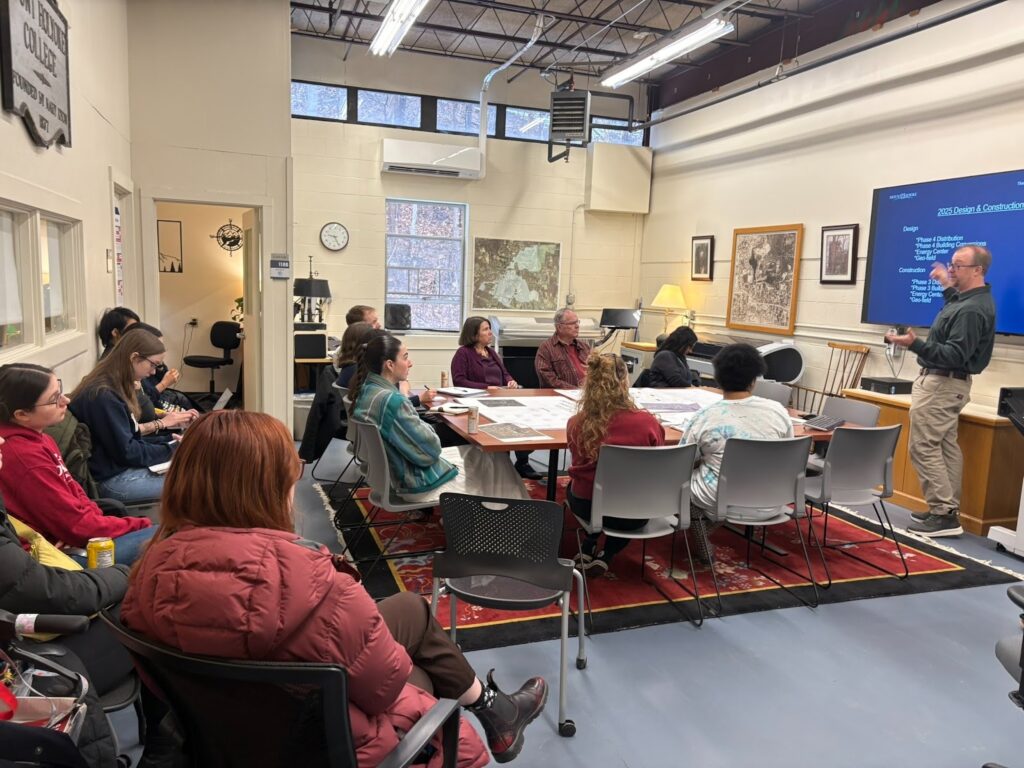
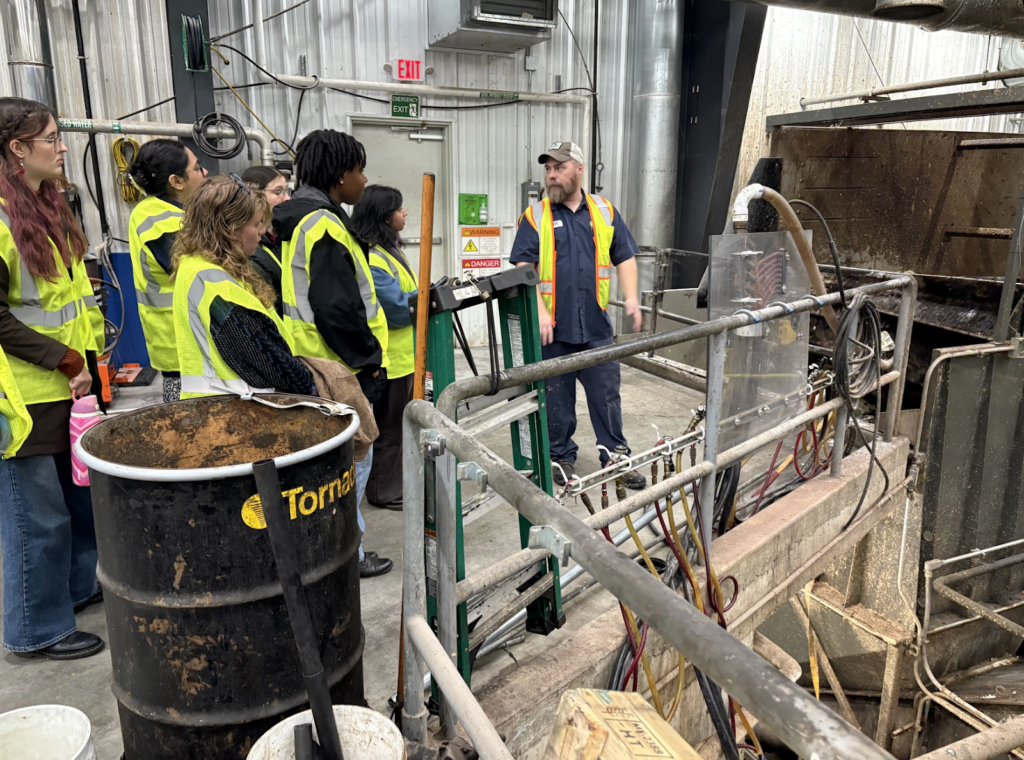
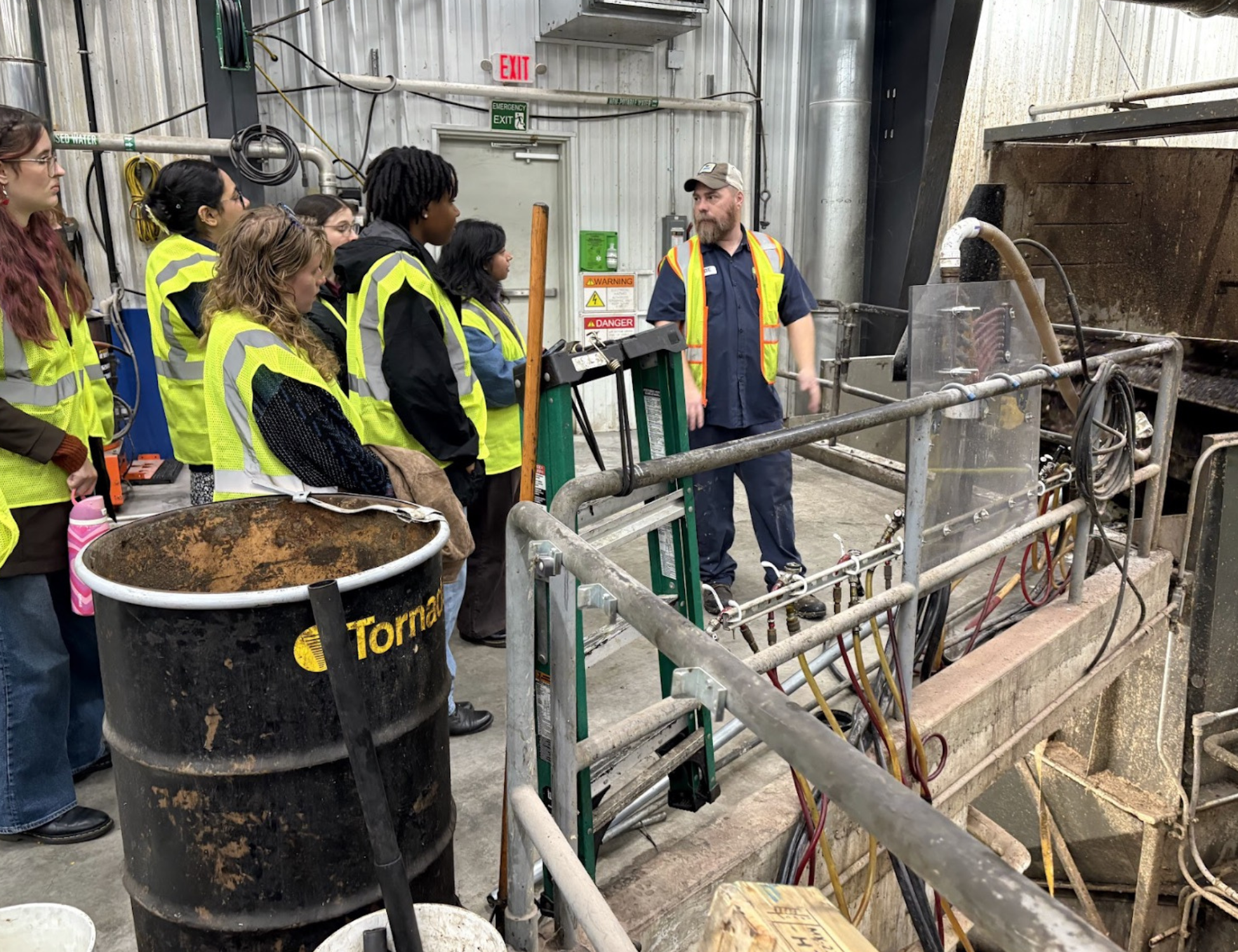
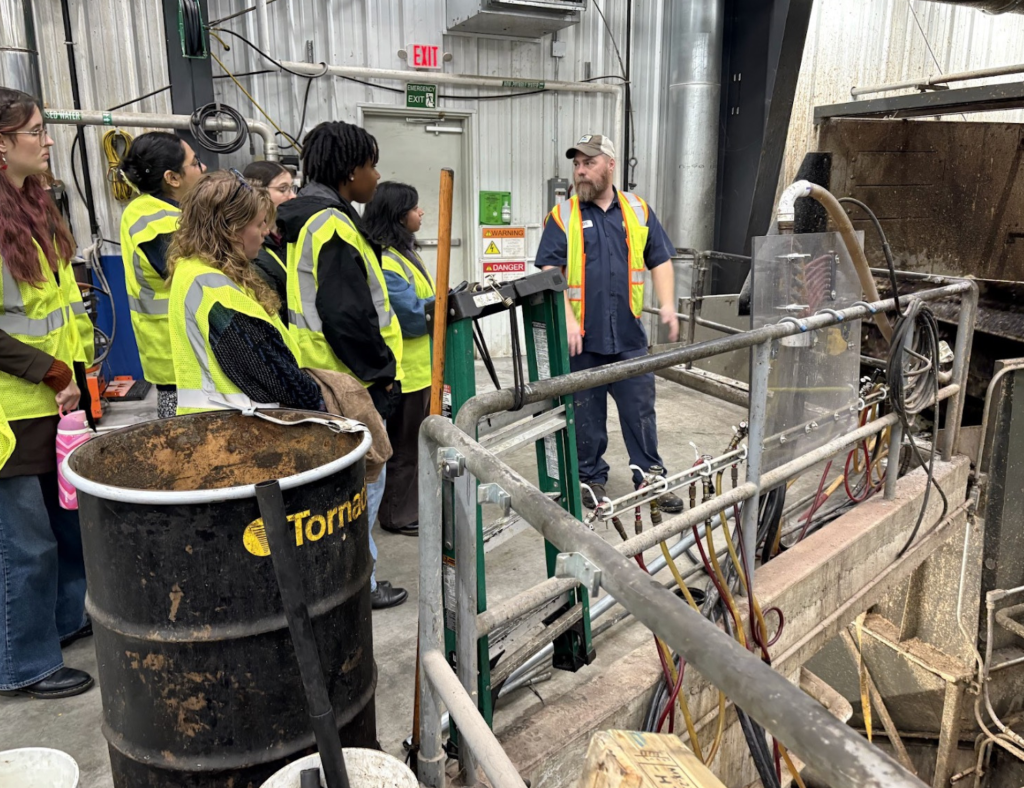
The initiative’s collaborative model fosters innovation across campus. Geothermal education and communication efforts, led by our Sustainability Program Manager and MWCE Fellows, improved understanding of the college’s transition to geothermal exchange and inspired the creation of monthly “Thermal Thursdays.” Another project, Hot to Go, highlighted the region’s limited public transportation options while celebrating alternative transit and giving students avenues for local activism. Each initiative emerged from CC2CJ’s culture of shared ownership and relationship-building.
Meeting only three to four times a year, some over Zoom, others over breakfast, CC2CJ offers manageable, meaningful engagement. Participants stay connected between meetings, strengthening a network of peers who hold one another accountable not through hierarchy, but through care.
CC2CJ is shifting the campus culture, transforming sustainability from an institutional goal into a community identity. Through deep conversations, shared problem-solving, and collective empowerment, Mount Holyoke is demonstrating what climate action looks like when it is truly built from the ground up: inclusive, equitable, and profoundly human.