
Energy Monitoring and Verification
Category: Energy Efficiency
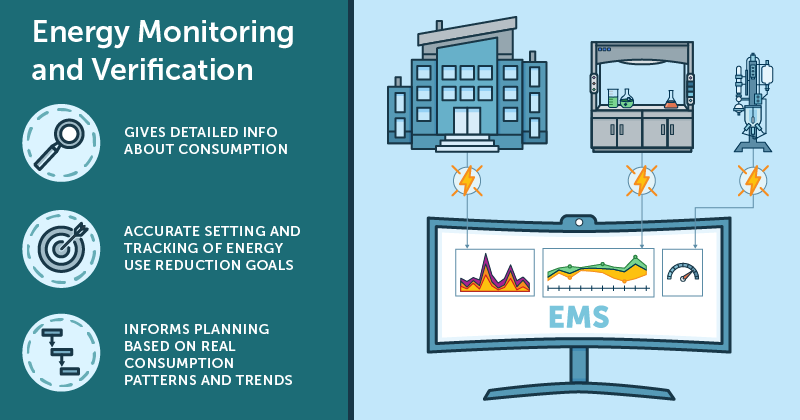
Energy monitoring and verification provides the data needed to identify factors that drive energy consumption and identify opportunities for reducing usage. Energy monitoring equipment installed at the building or process level collects the data, which is most powerful when used with an Energy Management System (EMS). An EMS or dashboard allows staff to identify trends in the data and better understand how underlying factors such as weather, occupancy, usage, and equipment drive energy usage. Any continuous or retro-commissioning program requires the collection and analysis of this data.
An EMS can use energy data to do the following:
- Identify excessive energy usage
- Detect equipment failure and operational issues
- Visualize energy consumption over time
- Track the impact of energy management initiatives
- Set and monitor efficiency targets
Benefits
- Gives detailed info about consumption at a granular level over time
- Allows for accurate setting and tracking of energy use reduction goals
- Informs future planning based on real consumption patterns and trends
- Real-time energy consumption becomes visible to occupants through the dashboard, allowing them to see their impact and savings
Challenges
- Requires installation of sub-metering and monitoring equipment.
- Will require additional software to manage, visualize, track, and analyze energy usage data.
Impacts
-
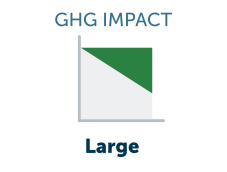
GHG Impact
Large
More InfoEnergy use reductions of 5-20% are possible.
-
Economic Impact
Net Savings
More InfoStudies have shown a savings of 5-20% can be achieved with an effective EMS as part of a continuous commissioning process
-
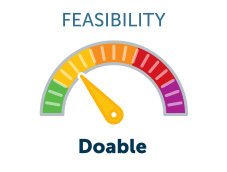
Feasibility
Doable
More InfoSome equipment will need to be installed and and EMS implemented.
-
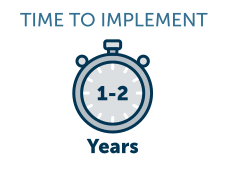
Timeline
1-2 years
More InfoHighly dependent on current metering infrastructure and campus size
-
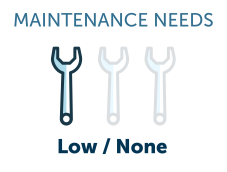
Maintenance
Low / None
More InfoMetering and monitoring equipment will not require extensive maintenance.
-
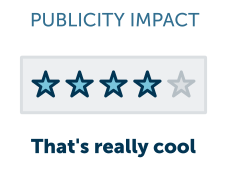
Publicity
That's really cool
More InfoPublishing collected data can be very effective in raising awareness and driving saving when paired with programs that engage building occupants.