
Get the latest on climate action:

On this page
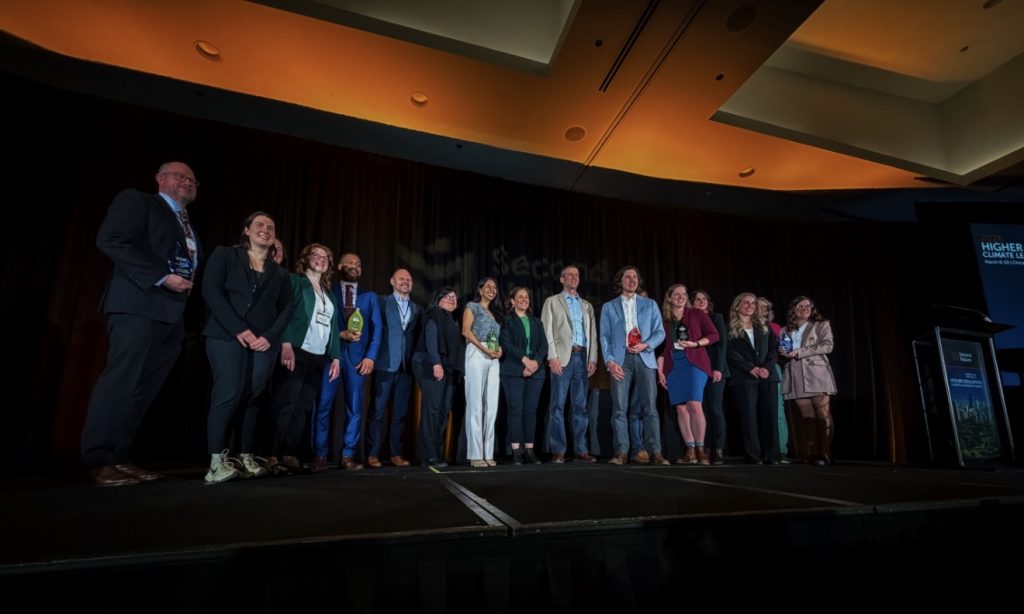
The Climate Luminary Honors celebrate the extraordinary efforts of higher education institutions that are making bold strides in climate action. Recipients serve as beacons for the sector and inspire transformative change across campuses, communities, and beyond.
Award Categories:
The application period has ended and awardees have been announced. The Climate Luminary Honors program uses a self-nomination model. Please carefully review the Frequently Asked Questions below.
Selected honorees will receive public recognition at the 2026 Climate Leadership Summit. Their climate action will be shared with Second Nature’s network via various communications channels, including emails to over 4,600 subscribers, social media, and the Second Nature website.
Your institution must be an active member of Second Nature’s Climate Leadership Summit, including signatories to the Presidents’ Climate Leadership Commitments, members of the University Climate Change Coalition (UC3), and Affiliate Members. For more information on Second Nature membership, please contact Steve Muzzy.
Additionally, to be most successful, you need to demonstrate that your climate action project:
The 2026 application period is closed, and recipients have been announced. Stay tuned for the application dates for 2027. The Climate Luminary Honors program uses a self-nomination model.
Yes! Submissions can include an optional “digital story” that showcases the project entry. Digital stories about your project are highly recommended as they give application reviewers a great visual overview of your climate action work. All digital stories must be submitted via a YouTube or web page link. Videos must not exceed two minutes in length. If you do not have a digital story ready at the time of application submission, submit it to [email protected] no later than 11/30/2025 with the subject line: “CLH digital story – Your Institution Name.”
Yes, submissions can be in one or more of the following five categories of climate action. However, an institution can only receive one award.
The path to campus decarbonization includes technical solutions and coordinated planning across the institution. Submitted projects must show that they have made tangible decarbonization efforts. Examples include:
The project demonstrated that their campus has integrated justice into campus climate action plans or projects in transformative ways. Examples include:
The project demonstrates the campus has collaboratively engaged with local communities and government to address environmental challenges. This may include outreach programs, community-based projects, and partnerships with local organizations. Examples include:
Projects that foster a skilled workforce ready to tackle climate-related challenges. This includes promoting sustainability-focused curricula, research, and career development opportunities. Examples include:
Projects that conduct climate solutions research that meets society’s needs, particularly those who are most vulnerable and who are impacted “first and worst” by climate and extreme weather events. Examples include:
The project demonstrates that the campus is preparing for and adapting to the impacts of a changing climate while actively supporting community resilience. Projects should show how institutions are helping their campus and surrounding communities withstand climate-related disruptions through proactive planning and capacity-building. Examples include:
You may submit your questions and updates to [email protected] with the subject line “CLH inquiry or update – Your Institution Name.”
For more information about the Climate Luminary Honors, please email us at [email protected]

Stay Connected to Climate Action
Sign up for the Implementer, Second Nature’s monthly newsletter, for updates, network news, resources, and opportunities to engage in climate action across higher education.