Oil Well Plugging
Category: Financial/Accounting Strategies
Oil wells have been used for decades to drill down into the Earth to collect fossil fuels, like oil and gas. There are millions of these wells scattered across the United States. Over time, many have been orphaned or abandoned, not properly maintained as their collection begins to dwindle. These wells are described as orphans because they are without a “parent” company. The original owner may have gone out of business, changed, abandoned, or lost them over the last hundred years. Once abandoned, the wells become wards of the state where they are located. Oftentimes, these wells release methane, a greenhouse gas 84x more potent than CO2. Plugging these super-emitter wells can generate high integrity carbon offsets.
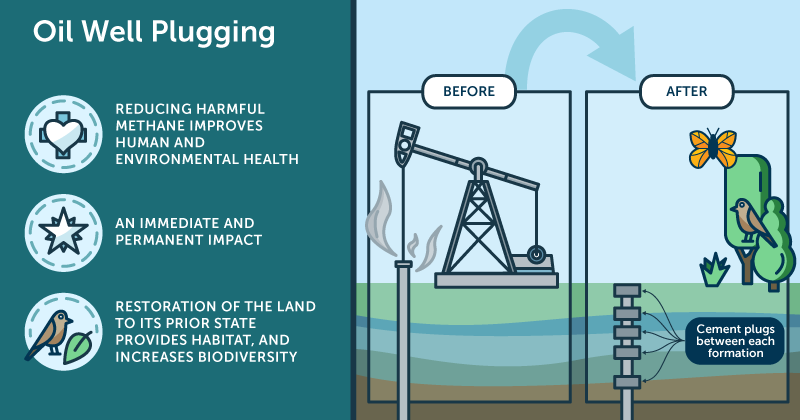
Plugging wells involves permanently plugging the well with cement and then restoring the area to a more natural state by removing the above ground well infrastructure and piping, clearing trash, and removing contaminated soil followed by reseeding the site with native plants.
Higher education institutions may participate by purchasing the offsets that fund these projects, visiting well sites, and contributing educationally with pre- and post-plug measuring, identification of flora and fauna, and soil sampling and testing.
Benefits
- Reducing harmful methane improves human and environmental health
- Plugging has an immediate and permanent impact
- Restoration of the land to its natural state through restoring the natural ecosystem of the site, provides habitat, and increases biodiversity
Challenges
- Finding these orphaned wells
- Gathering the finance needed to plug the wells
- Building a relationship with the landowner
- Measuring the emissions of the well in its current state
- Ensuring the safety of workers when plugging the wells
- While the previous owners of the well should be responsible for the environmental impact of the wells, there is no incentive or regulatory mandate for companies to remediate the wells. As a result, they are often orphaned or abandoned.
Marginal wells
Another type of well that can be plugged in a marginal well. Most oil wells don’t start out marginal. In the beginning, a new well can produce thousands of barrels of oil or gas every day. Over time, as the reservoir underground is drained, the flow slows down. Production declines naturally, year after year. When a well stops producing enough to be profitable for a big oil company, it often gets sold off. These “end-of-life” wells are picked up by smaller producers who can squeeze out the last bit of oil or gas with lower overhead. By definition, marginal wells produce less than 15 barrels of oil per day or 90 thousand cubic feet of gas per day. Due to their small output, they barely generate profit and are difficult to justify maintaining when prices drop. While they remain under an operator’s care, their aging equipment and thin margins create risks. Many marginal wells are one step away from being orphaned wells. Plugging these marginal wells can stop the production of oil and gas from a marginal well and close it permanently. The plugging of these wells can also be used to generate high-quality carbon offsets.
Impacts
-
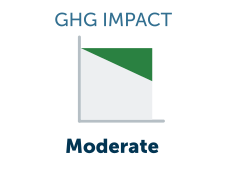
GHG Impact
Moderate
-
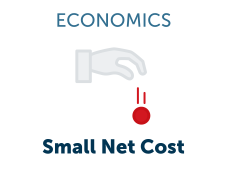
Economic Impact
Small Net Cost
-
Feasibility
Doable
-
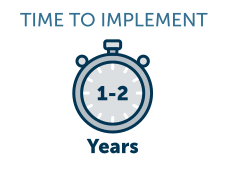
Timeline
1-2 years
-
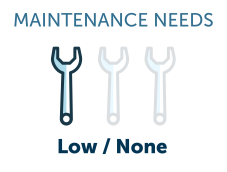
Maintenance
Low / None
-
Publicity
That's cool