
Get the latest on climate action:
Home » Climate Leadership Network » Network Exclusives » Building Energy Research Capacity at Under-Resourced Institutions
With the support of a $249,788 grant from the Alfred P. Sloan Foundation, Second Nature will undertake a first-of-its-kind pilot project for our organization beginning in fall 2023 to study and address federal funding barriers faced by researchers at higher education institutions not commonly involved in climate research.
Historically Black Colleges and Universities (HBCUs), Tribal Colleges and Universities (TCUs), community colleges, and Primarily Undergraduate Institutions (PUIs) have a vital role to play in accelerating climate solutions research, and this pilot project aims to help researchers at these institutions overcome barriers and build capacity to access the unprecedented funding currently available in the energy research field. Read more about the project in our press release.
Currently, Second Nature is in Phase 3 of this Project. We have selected 13 faculty members for our Energy Expansion Research Cohort (EERC) and are in the process of moving through our Capacity Building Sessions, scheduled through April of 2024. Meet the cohorts below!
Once the Capacity Building Sessions are completed, faculty from the cohort are charged with completing a Federal Funding Application to support their energy systems research/solutions. These applications are due to be submitted by August 2024.

Department of Geography, Geology, and Environmental Science
University of Wisconsin – Whitewater
Dr. Prajukti (juk) Bhattacharyya received her Ph.D. from University of Minnesota, Twin Cities. She is trained as a structural geologist with other research interests including petrology, geochemistry, volcanoes, landslide monitoring, and resource extraction. She is also interested in discipline-based educational research, assessment of student learning, and undergraduate STEM education through course-based research. Her current grant-funded research involves ways to incorporate culturally appropriate indigenous ways of teaching and learning in STEM classrooms.

Associate Professor of Physics
University of Wisconsin – Whitewater
Dr. Ozgur (Oz) Yavuzcetin holds a Ph.D. in physics from UMass Amherst, specializing in nanofabrication and fuel cell membranes. His postdoctoral research at Northwestern and Northeastern Universities focused on nanophotonics and high-resolution brain wave imaging. Currently, as an associate professor of physics at UW-Whitewater, Oz’s research centers on sensors, nanotechnology, and neurophysics, providing hands-on experience to students through research initiatives. He imparts knowledge in courses covering introductory physics, energy, electronics, modern physics, and embedded systems. Dedicated to mentorship, he guides undergraduates at UW-Whitewater in research, particularly in areas such as landslide monitoring using diverse sensor technologies.

Assistant Professor of Environmental Studies and Data Science
Wofford College
Dr. Jennifer Bradham, an assistant professor of Environmental Studies and Data Science at Wofford College, earned a BS from the College of Charleston, an MS from the University of California, Santa Barbara, and a Ph.D. from Vanderbilt University. Most broadly, her research seeks to quantify the complex relationships between people and nature. Much of this work occurs in the Neotropics where she uses large mammals as proxies for understanding how tropical ecosystems are changing in response to anthropogenic climate and land use change. In addition, she also developed a local research program rooted in data science and focused on equity.

Associate Professor of Environmental Sustainability
The University of Montana Western
Dr. Crootof is a human-environment geographer specializing in water and energy management, human dimensions of global change, and science communication. Within her classes, Dr. Crootof is engaging undergraduate students in renewable energy transitions research in Montana and Nepal. She looks forward to connecting research findings with other mountain environments to support energy transitions that work for, not against, rural communities. As a member of this cohort, Dr. Crootof is excited to seek funds that support undergraduate research in renewable energy transitions and climate resiliency through student-driven climate adaptation, climate mitigation, and climate justice activities.
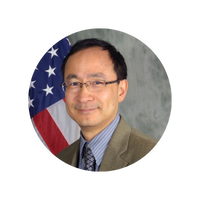
Professor & Chair, Department of Chemistry & Physics
Alcorn State University
Dr. Hua-Jun S Fan serves as the Chair of the Chemistry Department at Alcorn State University. Dr. Fan has a Ph.D. in Chemistry from University of Arizona, Postdoctoral training at TAMU and UNC Chapel-Hill, and 70+ refereed publications in leading journals, Dr. Fan is a respected authority in computational chemistry, machine learning, and additive manufacturing. Dr. Fan is committed to advancing research, fostering excellence in teaching, and promoting collaboration within the department at Alcorn.

Visiting Assistant Professor of Mathematics
Washington and Lee University
Dr. Kumudu Janani Gamage is the Visiting Assistant Professor of Mathematics at Washington and Lee University. She is a computational applied mathematician with a Ph.D. from Old Dominion University and a master’s degree in Sustainable Environment and Energy Systems from Middle East Technical University, Northern Cyprus. As a Visiting Assistant Professor at Washington and Lee University, she teaches various mathematical courses, including calculus and ordinary differential equations, using innovative pedagogical techniques. Her research expertise encompasses numerical methods for interface problems, as well as research and development in green energy technologies and sustainable practices.
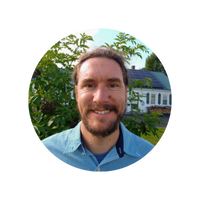
Director of Energy
College of the Atlantic
David Gibson is the Director of Energy at College of the Atlantic. His focus areas include Energy Systems, and Building Science. Some of his course offerings include Building Science and Energy Auditing, Green Building Through the Lens of LEED, Interactive K-12 Energy Education, Physics and Mathematics of Sustainable Energy, Practicum in Sustainable Energy. For this role, from Feb 2020-present Gibson served as Executive Committee Member, Sierra Club Maine Chapter. David has transitioned two homes entirely off of fossil fuels, including a post and beam farmhouse built in 1828.
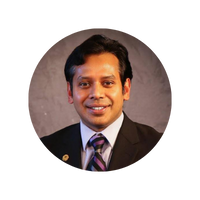
Professor of Sustainable Management and Economics
University of Wisconsin – Superior
Dr. Sakib Mahmud preferred pronouns (He, Him, His), is a Professor in Sustainable Management and Economics at the University of Wisconsin, USA. He serves on the boards of the Redevelopment Authority of the City of Superior, Wisconsin, and the Duluth Superior Area Community Foundation. Recently, he is nominated as President of the Wisconsin Economic Association (WEA) effective. Dr., Mahmud joined Duluth Superior Eco Rotary Club, which serves communities in Duluth, Minnesota, and Superior, Wisconsin with different environmentally focused service projects, in fall of 2020. He is, currently, the President Elect of the Duluth Superior Eco Rotary Club which falls under the Rotary International District 5580.

Executive Assistant to the Vice President for Institutional Advancement
Jackson State University
Alondria Owens currently serves as the Executive Assistant to the Vice President for Institutional Advancement, and Board Administrator for the JSU Development Foundation. Alondria is a seasoned veteran in community engagement, customer service, workforce training and development, budget management, and administrative supervision. Additionally, Alondria is a licensed science educator with over 10 years of direct classroom experience. Her passion is connecting the right people to further the development and provision of opportunities to under-served and under-represented students and groups. Alondria’s passions also align with her philanthropic nature.
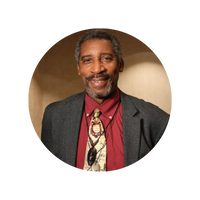
Associate Professor of Geography and Director of the Geographic Information Sciences Laboratory
Tennessee State University
Dr. David A Padgett serves as the Associate Professor of Geography and Director of the Geographic Information Sciences Laboratory, at Tennessee State University, in Nashville, Tennessee. He is a core team member of the HBCU Environmental Justice Technical Team and HBCU Climate Change Consortium. He also serves on the stakeholder advisory group for NASA. His focus area is Geographic Information Systems (GIS), Environmental Justice.
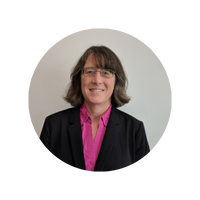
Chair of Marine and Environmental Sciences
Savannah State University
Dr. Carol Pride joined the faculty of Savannah State University in 2002 and serves as chair of SSU’s Department of Marine and Environmental Sciences. Her background is in marine science and paleoceanography. Before coming to Savannah, she completed a BA in Environmental Science at Wesleyan University, a Ph.D. at the University of South Carolina in Marine Science, a visiting professorship at the College of Charleston, and postdoctoral research at the University of California Santa Barbara. Her research includes use of stable isotope biogeochemistry and micropaleontology in studies of short and long term climate and oceanic variability. She currently mentors SSU undergraduate and graduate students in research on our local estuaries, with emphasis on the impacts of humans and climate change on these systems.
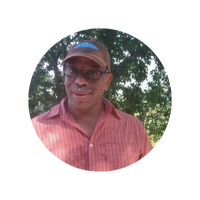
Associate Professor, Department of Chemistry and Senior Advisor, HBCU Green Fund
Clark Atlanta University
Myron Williams earned a BS in Microbiology from Howard University and a Ph.D. in Biology from the Massachusetts Institute of Technology, focusing on molecular genetics of nitrogen fixation. As a “World Citizen”, much of his research and teaching has focused on addressing the challenges of the underserved, from agriculture, medicine, education and infrastructure in the developing world, to the health disparity in prostate cancer among African American populations. He deeply values interdisciplinary collaboration to facilitate the implementation of STEM discovery to improve people’s lives.
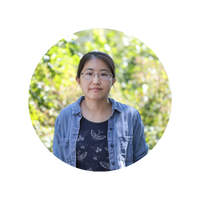
Assistant Professor of Chemistry
Warren Wilson College
Yuemei Zhang serves as an assistant professor of chemistry at Warren Wilson College, holding a Ph.D. in chemistry from North Carolina State University. Her research focuses on designing functional materials that drive progress in renewable energy technologies. She specializes in the development of high-performance catalysts for efficient green hydrogen production, the design of rare-earth-free permanent magnets in wind turbines for electricity generation, and the exploration of spintronics materials for enhanced data storage and retrieval. Her goal is to contribute to sustainable energy solutions and push forward materials science in the field of renewable resources.
Second Nature was established in 1993 to advance climate action in and through higher education and has been one of the longest-standing organizations to champion this work broadly. In our new strategic pathways, we see an opportunity to expand access to federal funding research with a new project supported by the Energy Research Expansion Fund.
We see a unique opportunity to design this new project with intentional elements that allow for deeper relationship building and engagement, specifically with minority faculty members at Predominantly Undergraduate Institutions, with signatories and non-signatories of our Climate Leadership Network. We believe this project will help us grow and deepen aspects of our existing programming and new strategic pathways for diversified institutional engagement, including intensifying relationships within our regional programming in the southeast and midwest and with institutions historically a minority in our networks, including HBCUs and Tribal Colleges.
We see an opportunity here to listen, learn, and respond in a new way, with the hope that we can act on a new understanding of how energy systems researchers can be supported to apply for federal funding at institutions not commonly involved in the research enterprise or lacking the capacity to do this work at the scale needed. We are committed to these values throughout this process. We welcome your support of this pilot project.
To learn more about this initiative, please contact Blythe Coleman-Mumford or Cami Sockow.

Stay Connected to Climate Action
Sign up for the Implementer, Second Nature’s monthly newsletter, for updates, network news, resources, and opportunities to engage in climate action across higher education.